This post contains affiliate links. I may earn a commission at no extra cost to you.
Quick Take
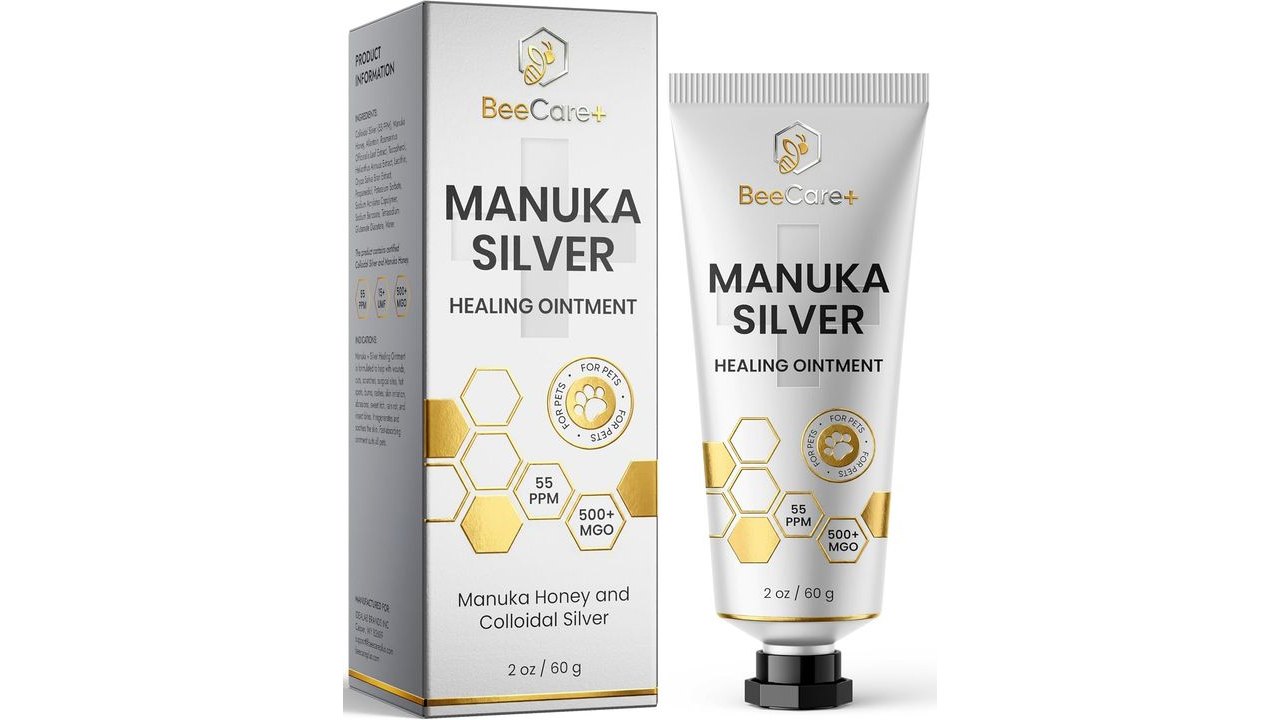
MGO 500+ Manuka honey plus 55 PPM colloidal silver in a 2-oz tube, aimed at hot spots, scratches, and minor irritations on dogs and cats. It’s an at-home option for surface-level trouble, not a replacement for a vet when a wound is deep, draining, or getting worse.
Good fit if you:
- Have a thick-coated breed (Golden, Shepherd, Lab) prone to hot spots
- Want a natural first-line option before or between vet visits
- Need one product for scratches, bites, rain rot, and sweet itch
- Own multiple animals (dogs, cats, horses, rabbits)
Look elsewhere if you:
- Have a relentless licker and no plan to use a cone during absorption
- Are dealing with a deep, punctured, swollen, or foul-smelling wound
- Prefer a brand with a long, thick independent review history
| Active honey | Manuka, MGO 500+ / UMF 15+ (New Zealand) |
|---|---|
| Silver | Colloidal silver, 55 PPM |
| Format | 2-oz tube |
| Protocol | 2, 3 times daily for 7 days |
| Species | Dogs, cats, horses, rabbits, other pets |
| Targets | Hot spots, scratches, cuts, burns, rain rot, sweet itch, insect bites, surgical sites |
That Red, Oozing Patch Appeared Overnight
Hot spots don’t wait for a convenient time. One warm, humid afternoon a dog is fine, and by the next morning there’s a patch of hair loss that’s red, angry, and weeping. Thick-coated breeds like Golden Retrievers, German Shepherds, and Labs get them most, because moisture and heat sit trapped against the skin. That’s the problem the Manuka Honey Ointment 500+ MGO is built to address: a natural, at-home first move for hot spots and minor irritations while you figure out whether a vet visit is next.
This is a manuka honey ointment for dogs (and cats, horses, and rabbits) that pairs high-grade honey with colloidal silver. It’s not a miracle cure, and it’s not meant for serious wounds. But for the everyday scratches, bug bites, and surface irritations that send pet owners scrambling to the medicine cabinet, it fills a real gap.
What MGO 500+ And UMF 15+ Actually Mean
MGO 500+ is a potency rating, and higher is stronger. MGO stands for Methylglyoxal, the natural compound in manuka honey responsible for most of its antibacterial punch. A 500+ rating means a high concentration of it, which is why this grade is marketed for soothing and supporting broken skin rather than eating on toast.
UMF 15+ is the second grading system, the Unique Manuka Factor. The two numbers describe the same honey from different angles, and both being on the high end is the point. The honey in this ointment originates from New Zealand, where the manuka plant grows and where the grading standards were developed.
Why it matters for a wound: studies have shown manuka honey has antibacterial activity against Staphylococcus aureus and Pseudomonas aeruginosa, two bacteria behind common skin infections in pets. It can also disrupt biofilm, the sticky bacterial layer that makes some wounds stubborn, while creating a moist, high-osmotic environment that’s hostile to bacteria but friendly to cell repair. It carries antioxidants, flavonoids, and phenolic acids with anti-inflammatory activity too.
The Colloidal Silver Part, Explained Plainly
The 55 PPM colloidal silver is there to help clean the area without stinging. PPM means parts per million, and the brand positions this concentration as non-irritating for all sizes and breeds. In practice, the silver handles gentle cleansing while the honey does the healing-environment work.
Here’s the fair caveat worth knowing before you buy: colloidal silver has a weaker clinical evidence base than manuka honey itself. Manuka is the better-characterized ingredient of the two for superficial wound dressings. Colloidal silver can also cause sensitivity in some dogs, so testing a small area first is smart if your pet has reactive skin.
Turning The Label Into Real-Life Benefits
Specs are dull until you translate them. The multi-condition claim (scratches, cuts, burns, rain rot, sweet itch, insect bites, surgical sites) means one tube can replace a small pile of single-purpose products. If your dog snags a paw one week and gets a bug bite the next, you’re reaching for the same 2-oz tube instead of buying something new each time.
The tube format is a quiet win. It lets you place ointment precisely on the spot without dunking your fingers into a jar and back into the wound, which keeps things more hygienic. The multi-species claim (dogs, cats, horses, rabbits) makes it a genuinely useful thing to keep in a household or barn with more than one animal.
And the natural angle solves a specific worry: owners who want to try something before jumping to antibiotics get a manuka-based option that supports faster healing of minor wounds and hot spots without a prescription.
The Licking Problem Nobody Should Ignore
Manuka honey tastes good, and that’s the catch. It’s sweet, and a pet with a fresh dab of ointment on an itchy spot will happily lick it right back off. That defeats the purpose, because the ointment needs time to absorb and do its job. This is the single biggest friction point with any manuka product, not just this one.
The practical fix is a cone (or a recovery suit) during the absorption window after each application. Some competing products bake in a lick deterrent to sidestep this, but this ointment doesn’t, so the workaround is on you. Stickiness is the other known compliance issue with honey-based formulas: on a squirmy pet it can take a steady hand and a distraction (a treat, a second person) to apply cleanly.
Get it now
Manuka Honey Ointment 500+ MGO – Dog Hot Spot Treatment for Scratches, Burns, Irritations – Cat Wound Care with 55-PPM Colloidal Silver for Dogs – Manuka + Silver Healing Ointment in a 2-oz Tube
Get the best price on Amazon →This post contains affiliate links. I may earn a commission at no extra cost to you.
Who Should Keep This Tube On Hand
The clearest fit is the owner of a hot-spot-prone breed. If you’ve got a Golden, a Shepherd, or a Lab that flares up every humid summer, having a manuka honey ointment for dogs in the drawer means you can act the moment you spot trouble instead of waiting days for an appointment.
Multi-animal households get outsized value here since one tube covers dogs, cats, horses, and rabbits. So do owners who lean natural-first and want to try something gentle before asking a vet about antibiotics for a minor scrape. It’s also a reasonable thing to have for post-surgical incision sites, though that use in particular should be run past your vet first.
Who it’s not for: anyone facing a deep, punctured, swollen, draining, or foul-smelling wound. Those need a veterinarian, full stop. This is a surface-level tool, and treating a serious wound at home wastes precious time.
How It Stacks Up Against The Alternatives
The most established rival is Absorbine Silver Honey. It uses patented MicroSilver BG rather than standard colloidal silver, and those larger particles sit on the skin’s surface as a protective barrier instead of being absorbed. It also carries the deepest bank of independent reviews, which matters because this Manuka Honey Ointment 500+ MGO is a relatively new listing with thinner long-term review data.
Other options fill different niches. Manuka Vet Hot Spot Salve skips silver entirely and leans on a richer botanical base of high-potency honey, bee propolis, beeswax, and calendula. KeraVet Gel builds in a lick deterrent and adds keratin protein for cell regeneration, which directly attacks the licking problem this ointment leaves to your cone.
The read: for minor cuts and hot spots, most manuka-based ointments perform comparably. This one’s differentiator is the combination of MGO 500+ / UMF 15+ honey with colloidal silver in a precise tube, plus a broad multi-species claim. If independent review depth is your top priority, Absorbine has the edge. If you want the higher honey grade and multi-animal flexibility, this is a strong pick.
Tips Before You Open The Tube
Clean and dry the area first, then apply a thin layer 2 to 3 times daily. The brand’s protocol runs 7 days for typical minor issues, with longer use for deeper wounds only after a specialist weighs in. Don’t assume 7 days is a hard finish line if the spot still looks angry, that’s your cue to call the vet.
Plan the cone before the first application, not after your pet has licked the spot clean. For sensitive-skinned dogs, dab a small test area and wait a day before treating the full spot. And keep expectations grounded: this supports healing of surface trouble, it doesn’t replace professional care when the wound is serious.
Pros
- High honey grade at MGO 500+ / UMF 15+, sourced from New Zealand
- One tube covers many conditions: hot spots, scratches, burns, rain rot, sweet itch, bites
- Works across dogs, cats, horses, and rabbits
- Tube format allows precise, hygienic application
- Natural, antibiotic-free first-line option with a 4.6-star Amazon rating
Cons
- Sweet taste invites licking, so a cone is essentially required during absorption
- Honey-based formulas can be sticky and tricky to apply on a squirmy pet
- Colloidal silver has a weaker evidence base than manuka honey itself
- Newer listing means thin independent, long-term review data
- Not suitable for deep, infected, or worsening wounds
Frequently Asked Questions
Is manuka honey safe if my dog licks it off the wound?
Manuka honey is generally safe if a pet ingests a small amount, but licking defeats the treatment because the ointment can’t absorb. The bigger issue is effectiveness, not toxicity, so a cone or recovery suit during the absorption window is strongly recommended.
Does MGO 500+ mean it’s stronger than lower-rated options?
Yes. MGO measures Methylglyoxal, manuka honey’s active antibacterial compound, and a 500+ rating is a high concentration. Higher MGO is generally more potent for soothing and supporting skin than lower-graded honey.
Can this replace a vet visit?
No, not for serious wounds. It’s an at-home option for minor scratches, hot spots, and irritations, but deep, punctured, swollen, draining, foul-smelling, or worsening wounds need a veterinarian. Use it as a first step for surface issues, not a substitute for professional care.
Does it work on cats too, or just dogs?
It’s labeled for cats as well as dogs, plus horses and rabbits. The same manuka-and-silver formula is marketed for cat wound care, and the honey is said to help balance skin pH across species.
How often and how long do I apply it?
Apply 2 to 3 times daily for 7 days for typical minor issues. Deeper wounds may need longer use, but that should happen only after consulting a specialist. If the area isn’t improving by the end of the week, contact your vet.
Should I use a cone while using this ointment?
Yes, a cone is recommended because the honey tastes sweet and pets tend to lick it off. Keeping the cone on for a while after each application gives the ointment time to fully absorb and actually work.
What’s the difference between colloidal silver and MicroSilver BG?
This product uses colloidal silver at 55 PPM, while some competitors like Absorbine Silver Honey use patented MicroSilver BG. MicroSilver BG has larger particles that stay on the skin’s surface as a barrier without absorbing, and it has a more characterized profile. Colloidal silver has weaker clinical support by comparison.
Is 2 oz enough for a full treatment course?
For a single minor hot spot or scratch treated over 7 days, a 2-oz tube is generally plenty since you only need a thin layer per application. Larger wounds, multiple spots, or big animals like horses will use it up faster, so buyers treating a lot of area may want a backup on hand.
Can I use it on a post-surgical incision site?
The product lists surgical sites among its uses, but incisions are best cleared with your vet first. Your surgeon may have specific aftercare instructions, and some incisions shouldn’t have anything applied at all early on.
How does it compare to prescription antibiotic ointments?
It’s a natural, non-prescription alternative for minor issues, not a direct swap for prescribed antibiotics. Manuka honey has documented antibacterial activity against common skin bacteria, but infected or serious wounds may still require a vet-prescribed treatment. Think of it as a first-line option for superficial trouble.
Get it now
Manuka Honey Ointment 500+ MGO
Get the best price on Amazon →This post contains affiliate links. I may earn a commission at no extra cost to you.