This post contains affiliate links. I may earn a commission at no extra cost to you.
Quick Verdict
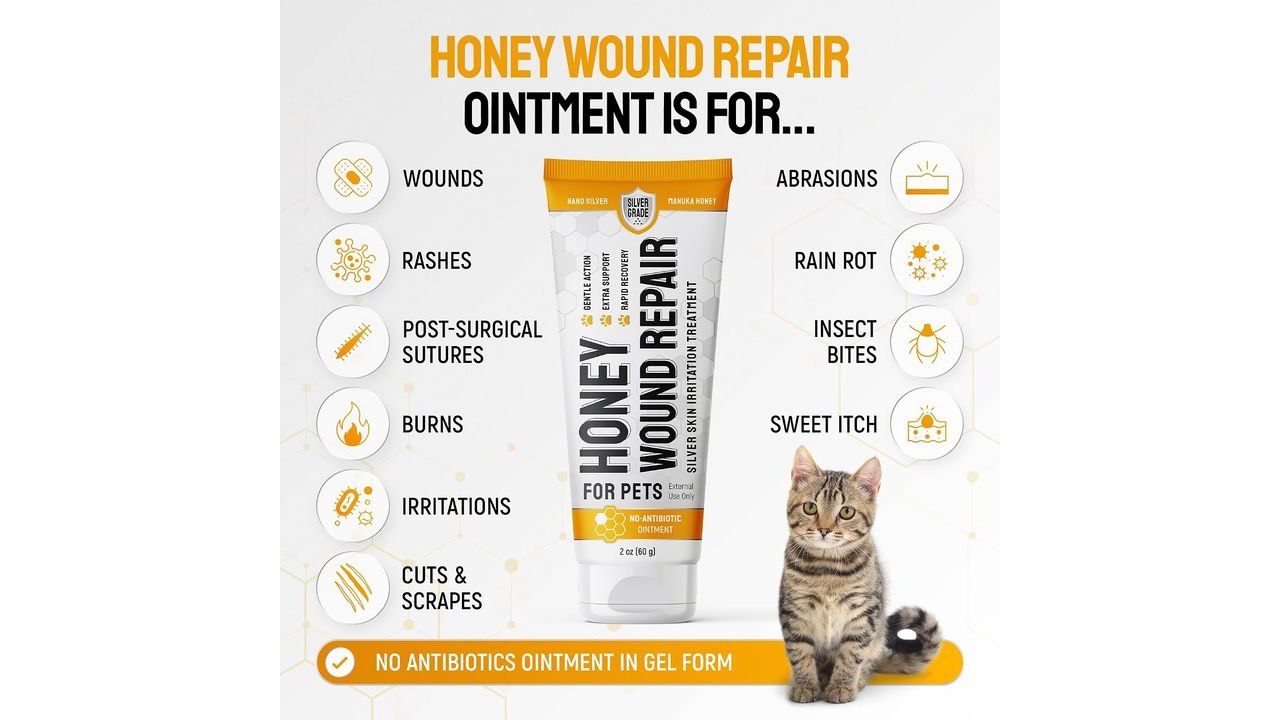
A Manuka honey and colloidal silver gel aimed at minor cat scratches, bites, and hot spots at home. Two catches worth knowing up front: the honey is sweet enough that a cat wants to lick it (a cone is recommended), and the MGO potency grade isn’t published. Good fit for genuinely small stuff, not deep or draining wounds.
Buy if you:
- Deal with minor play scratches or cat-on-cat bite nicks that don’t need the vet
- Want a non-antibiotic option for surface irritation and hot spots
- Have a multi-pet home and want one tube for cats, dogs, and horses
- Like a travel-friendly 2 oz tube for a pet first-aid kit
Skip if you:
- Can’t keep your cat from licking a sweet, honey-based gel and won’t use a cone
- Want a published, independently certified MGO honey rating before you buy
- Are treating a deep, punctured, swollen, draining, or foul-smelling wound
When a Cat Scratch Isn’t Vet-Serious but Still Needs Something
Cats find trouble. A tussle with the resident dog, a scuffle with another cat, a scrape from rough play, a raw itchy patch that keeps getting licked. Most of these don’t warrant an emergency visit, but they still need attention so a small scratch doesn’t turn into an infected mess. That gap is where Cat Wound Care Gel is meant to sit: a topical, antibiotic-free gel built around Manuka honey and colloidal silver for minor wounds, bites, rashes, and hot spots.
The pitch is simple. Keep a 2 oz tube in the cabinet, treat the small stuff at home, and reserve the vet for the things that genuinely need one. That’s a reasonable plan, so long as you know exactly what this gel can and can’t do. This guide breaks down the ingredients in plain language, walks through how it’s used, and answers the questions buyers keep asking before they hit purchase.
What’s Inside the Tube, and What Each Part Does
Two ingredients do the heavy lifting: Manuka honey and colloidal nano silver. Manuka honey is known for strong antibacterial activity and for keeping a wound moist, which supports a cleaner healing environment and helps shed dead tissue. Colloidal silver is added as a second protective agent against bacteria. The rest of the formula rounds out the comfort and texture side.
Here’s the full published ingredient list and the core specs, so you can compare it against anything else on your shortlist.
| Spec | Detail |
|---|---|
| Key actives | Colloidal Nano Silver + Manuka Honey |
| Full ingredients | Colloidal Silver, Sanguisorba Extract, Panthenol, Menthol, Calendula Extract, Manuka Honey, Glycerin, Matrine Extract, Tween 80, Sodium Carboxymethyl Cellulose, Phenoxyethanol, Purified Water |
| Format | Orange, water-soluble gel |
| Size | 2 oz tube |
| Dimensions | ~5.12 x 1.57 x 1.57 in |
| pH | Formulated to match skin pH |
| Species | Cats, dogs, horses, and other pets |
A few of the supporting ingredients earn their spot. Panthenol and glycerin add moisture and soothing. Calendula and Sanguisorba are plant extracts traditionally used for irritated skin. Menthol gives a light cooling feel. The formula skips artificial additives and, per the brand, contains no antibiotic ingredient, which is exactly the point for owners avoiding antibiotics.
Features Translated Into What They Mean for You
Antibiotic-free matters if you’re the kind of owner who worries about resistance or wants to avoid a prescription for a tiny scrape. This gel gives you a topical option that doesn’t lean on antibiotics.
The pH-balanced, sting-free formulation is aimed at cooperation. Cats do not tolerate a burning application, so a gel marketed as comforting rather than stinging is more likely to get on the wound and stay there without a fight.
The 2 oz travel tube is a practical detail. It fits a first-aid kit, a carrier bag, or a barn shelf, and the water-soluble gel is designed to apply quickly and absorb rather than sit as a heavy layer. One tube covering cats, dogs, and horses is genuinely useful in a multi-animal household where cabinet space is tight.
How to Apply It, and How Often
The dosing protocol is 2 to 3 times daily for the first week, then once daily until the area is completely healed. Clean the spot first, apply a thin layer of gel, and for deep wounds only use it under a vet’s supervision.
For long-haired or thick-coated cats, trimming the fur around the wound first makes a real difference. Honey-based gels are naturally tacky, and matted fur turns a quick application into a sticky wrestling match. Trim, clean, apply, done. On short-haired cats it’s much simpler.
The Licking Problem Is the Real Catch
Manuka honey tastes sweet, and that works against you here. The same palatability that makes it easy to dose also makes a cat want to lick it straight off the wound, which undoes the treatment and interferes with healing. The product’s own instructions recommend a cone, and for dogs specifically the listing says to use one to stop licking.
A small amount of ingested medical-grade Manuka honey is generally considered non-toxic, so the concern isn’t poisoning, it’s healing. If your cat won’t leave the area alone and you won’t use a cone or a recovery collar, this gel will struggle to do its job. That’s the single most important thing to weigh before buying, and it’s why a lick deterrent product like KeraVet appeals to some owners instead.
Get it now
Cat Wound Care Gel for Scratches, Bites & Irritations – Hot Spot Treatment for Cats & Kittens – Honey Wound Repair Ointment in Gel Form with Colloidal Silver & Manuka Honey for Topical Use – 2 Oz Tube
Get the best price on Amazon →This post contains affiliate links. I may earn a commission at no extra cost to you.
Who This Gel Is Genuinely For
It fits owners handling minor, surface-level issues: play scratches, small bite nicks between housemates, mild rashes, bug bites, and early hot spots that are red and itchy but not deep or draining. It’s a daily-helper style product for recurring, relapsing skin irritation, the kind of low-grade problem that keeps coming back and pushes people toward an at-home topical they can reach for repeatedly.
Multi-pet homes get extra mileage since the same tube works on dogs and horses. And for owners specifically avoiding antibiotics, the non-antibiotic formula is the whole appeal. If any of that describes your situation, it’s an easy one to keep on hand.
Worth Knowing Before You Buy: Where It’s Thin
The biggest transparency gap is the MGO rating. MGO measures the antibacterial potency of Manuka honey, and higher generally means more healing power. Competing products like Manuka Vet publish an independently certified MGO 500+ figure. This gel does not state its MGO level anywhere, which leaves informed buyers guessing at the strength of the star ingredient.
Colloidal silver is the softer part of the formula on the evidence front. It carries weaker clinical support than medical-grade Manuka honey, and “colloidal nano silver” is a smaller-particle approach that lacks the patented, barrier-forming claim of something like Absorbine’s MicroSilver BG. There’s also a specific clinical nuance for surgical sites: a peer-reviewed controlled trial in cats found Manuka honey didn’t produce a better cosmetic healing score than the control, and skin thickening was higher after use. That doesn’t make it useless, but it’s a reason to treat spay or neuter incision claims cautiously and follow your vet’s guidance.
Finally, this is a relatively new listing with a thinner independent review history than the category veterans. None of these are dealbreakers for minor wound care, but they’re the limits of the product’s scope.
How It Stacks Up Against Silver Honey, Manuka Vet, and KeraVet
Cross-shoppers usually land on three alternatives. Here’s how the actives, format, and standout features line up.
| Cat Wound Care Gel | Silver Honey | Manuka Vet | KeraVet | |
|---|---|---|---|---|
| Actives | Nano silver + Manuka | MicroSilver BG + Manuka | MGO 500+ Manuka | Keratin + deterrent |
| Format | 2 oz gel tube | 2 oz tube / 8 oz spray | 0.71 oz tube | Gel tube |
| MGO certified? | Not stated | Not stated | Yes, 500+ | N/A |
| Lick deterrent? | No, cone advised | No | No | Yes, built-in |
Silver Honey’s MicroSilver BG is a patented, larger-particle silver that stays on the skin surface as a barrier and, combined with Manuka, gives a creamier, less sticky texture that owners praise for usability. Manuka Vet wins on ingredient transparency with its certified MGO number, though it’s a smaller tube. KeraVet takes a different route entirely with keratin for cell growth plus a built-in lick deterrent, which sidesteps the cone issue. Cat Wound Care Gel’s edge is the combined honey-and-silver approach in a generous 2 oz tube at a competitive spot, with the trade-off being the unpublished MGO grade.
Advice Before You Reach for the Tube
Match the product to the injury. This gel is for genuinely minor stuff. Deep, punctured, swollen, draining, foul-smelling, or worsening wounds belong at the vet, full stop. If a spot isn’t improving after a few days of consistent use, that’s your signal to call the clinic rather than keep treating at home.
Set yourself up for success on application day: clean the area, trim surrounding fur on fluffy cats, apply a thin layer, and have a recovery collar ready if your cat is a determined licker. Keep the tube capped, note the expiration date printed on the box, and store it somewhere accessible so it’s actually there when a scrape happens. You can check the current price on Amazon if it fits your kit.
Pros
- Antibiotic-free formula built on Manuka honey and colloidal silver
- Marketed as sting-free and pH-balanced for easier application on cats
- Works across cats, dogs, and horses, so one tube covers a multi-pet home
- Travel-friendly 2 oz tube with a quick-absorbing, water-soluble gel
- Full ingredient list published, including soothing extracts and panthenol
Cons
- Sweet honey encourages licking, so a cone is often needed
- MGO potency grade of the Manuka honey is not published
- Colloidal silver has weaker clinical support than medical-grade honey
- Sticky texture can be fiddly on long-haired cats without fur trimming
- Not suitable for deep, draining, or serious wounds
What we’d improve
Two changes would make an informed buyer far more confident:
- Publish the MGO rating, Printing a certified MGO number on the box, the way Manuka Vet does, would remove the biggest open question about the honey’s strength.
- Address licking in the formula, A built-in bitter lick deterrent, like KeraVet’s approach, would solve the cone inconvenience that owners run into most.
Frequently Asked Questions
Is this gel safe if my cat licks it off?
A small amount of ingested Manuka honey is generally considered non-toxic, so licking isn’t a poisoning risk. The problem is healing: licking pulls the gel off the wound and irritates it, which is why the instructions recommend a cone or recovery collar.
Will it sting when I apply it?
It’s marketed as sting-free and comforting, and it’s pH-balanced to match skin. That’s meant to make cats tolerate application without the burning reaction some antiseptics cause. Every cat is different, but the formula is designed to be gentle.
How often do I apply it, and for how long?
Apply 2 to 3 times daily for the first week, then once daily until the area is fully healed. For deep wounds, only use it under a vet’s supervision. Clean the spot before each application.
Is it safe for kittens?
The product is marketed for cats and kittens of all breeds, ages, and sizes. As with any topical on a very young or tiny animal, a quick check with your vet before first use is a sensible move, especially on a licker.
Can I use it on a spay or neuter incision?
Surgical sites should be managed with your vet’s guidance rather than treated on your own judgment. One controlled trial in cats found Manuka honey didn’t improve the cosmetic healing score versus control and increased skin thickening, so the surgical-site case is exactly where you defer to your clinic.
Does it absorb, or leave a sticky mess in the fur?
It’s a water-soluble gel designed to absorb fairly quickly, but Manuka honey products are tacky by nature. On thick or long-haired cats, trimming the fur around the wound first prevents matting and makes application much cleaner.
What’s the difference between colloidal nano silver and regular colloidal silver?
Nano silver uses smaller particles than standard colloidal silver. That’s different from patented forms like MicroSilver BG, which use larger particles that stay on the skin surface as a barrier. This gel’s nano silver doesn’t carry that specific patent claim.
When should I stop treating at home and see the vet?
Go to the vet for any deep, punctured, swollen, draining, foul-smelling, or worsening wound. Also call if a minor spot isn’t improving after a few days of consistent use. This gel is for genuinely minor injuries only.
How does it compare to Neosporin or Absorbine Silver Honey?
Unlike Neosporin, this is a non-antibiotic gel, which is its main selling point. Against Silver Honey, it shares the honey-plus-silver idea, but Silver Honey uses a patented MicroSilver form and is often praised for a smoother, less sticky texture. Neither publishes an MGO rating.
Does my cat definitely need a cone?
Only if your cat licks the treated area, but most cats do. Because the honey tastes sweet, a cone or recovery collar is the reliable way to keep the gel where it belongs long enough to work.
Get it now
Cat Wound Care Gel
Get the best price on Amazon →This post contains affiliate links. I may earn a commission at no extra cost to you.