This post contains affiliate links. I may earn a commission at no extra cost to you.
Quick Verdict
This is an herbal dietary supplement, not a pharmaceutical antibiotic, and the label’s own dosing chart contradicts itself. For a multi-species household wanting a gentle, over-the-counter option for mild, early symptoms, one 2-oz dropper bottle covers rabbits, poultry, reptiles and fish. For a confirmed infection, it’s no substitute for a vet.
Buy if you:
- Keep several species (rabbits, chickens, turtles, fish) and want one bottle instead of five
- Want a liquid you can drip into the mouth or mix into food, since pilling exotics is nearly impossible
- Are looking to support mild, early runny-nose, allergy or digestive flare-ups
- Prefer plant-based ingredients like cranberry, echinacea and olive leaf
Skip if you:
- Are treating a confirmed bacterial infection and need real bactericidal action, not herbs
- Need precise, species-specific dosing for fish or reptiles, since the weight chart is mammal-based and internally contradictory
- Have picky exotics that may refuse the natural chicken flavor
| Bottle size | 2 oz with compact dropper |
|---|---|
| Active ingredients | Pau D’arco, Cranberry, Licorice, Olive Leaf, Echinacea Purpurea, Wormwood, Goldenseal |
| Inactive ingredients | Natural chicken flavor, deionized water, citric acid, vegetable glycerin |
| Frequency | Up to 2x daily; 1x for basic supplemental help |
| Species | Rabbits, reptiles, turtles, guinea pigs, fish, poultry (duck, turkey, goose) |
| Not for | Human consumption |
No Exotic Vet Nearby? That’s the Real Problem This Solves
Finding a vet who treats a rabbit with snuffles, a chicken that’s sneezing, or a turtle with a runny nose is harder than it should be. Exotic-animal appointments are expensive, often booked out, and sometimes an hour’s drive away. That gap is exactly where a product like Herbal Pet Antibiotics tries to slot in: an over-the-counter, plant-based liquid marketed for mild, early-stage symptoms across a lot of different animals.
Here’s the thing to get straight before anything else. Despite the name, this is a natural dietary supplement, not a regulated pharmaceutical antibiotic. The FDA has not evaluated its statements. So if you’re picturing something that will clear a diagnosed bacterial infection the way a prescription would, this isn’t that. What it is: a blend of herbs that owners reach for to support pets through minor flare-ups when a vet visit isn’t practical yet.
What’s In the Bottle and What Each Ingredient Is For
The active stack is seven herbs: Pau D’arco, Cranberry, Licorice, Olive Leaf, Echinacea Purpurea, Wormwood, and Goldenseal. Cranberry is the one most people recognize for urinary support, which lines up with the UTI angle in the marketing. Echinacea and olive leaf are commonly used for immune and seasonal-allergy support. Wormwood and goldenseal have long herbal histories, though none of these replace a prescription antimicrobial for a real infection.
The inactive ingredients are simple: natural chicken flavor, deionized water, citric acid, and vegetable glycerin. That chicken flavor is worth flagging early, because it’s chosen to appeal to poultry and mammals, not fish or reptiles. More on that below.
Features Translated Into What They Mean for You
The big selling point is breadth. One 2-oz bottle is pitched for rabbits, reptiles, turtles, bearded dragons, guinea pigs, chickens, ducks, geese, quail and fish. For a small homestead or a multi-pet home, that means you’re not buying a separate SKU for every animal. Whether one formula genuinely suits a fish and a goose equally is a fair question, and the answer is that the same core herb stack appears across several of the brand’s flavored listings, which points to one base formula repackaged.
The liquid format is the other real advantage. Anyone who’s tried to pill a rabbit or a chicken knows it’s a losing battle. A dropper you can aim at the mouth, or squeeze into food or water, sidesteps that entirely. The compact dropper is genuinely the most practical thing here.
The Dosing Chart Has a Real Problem
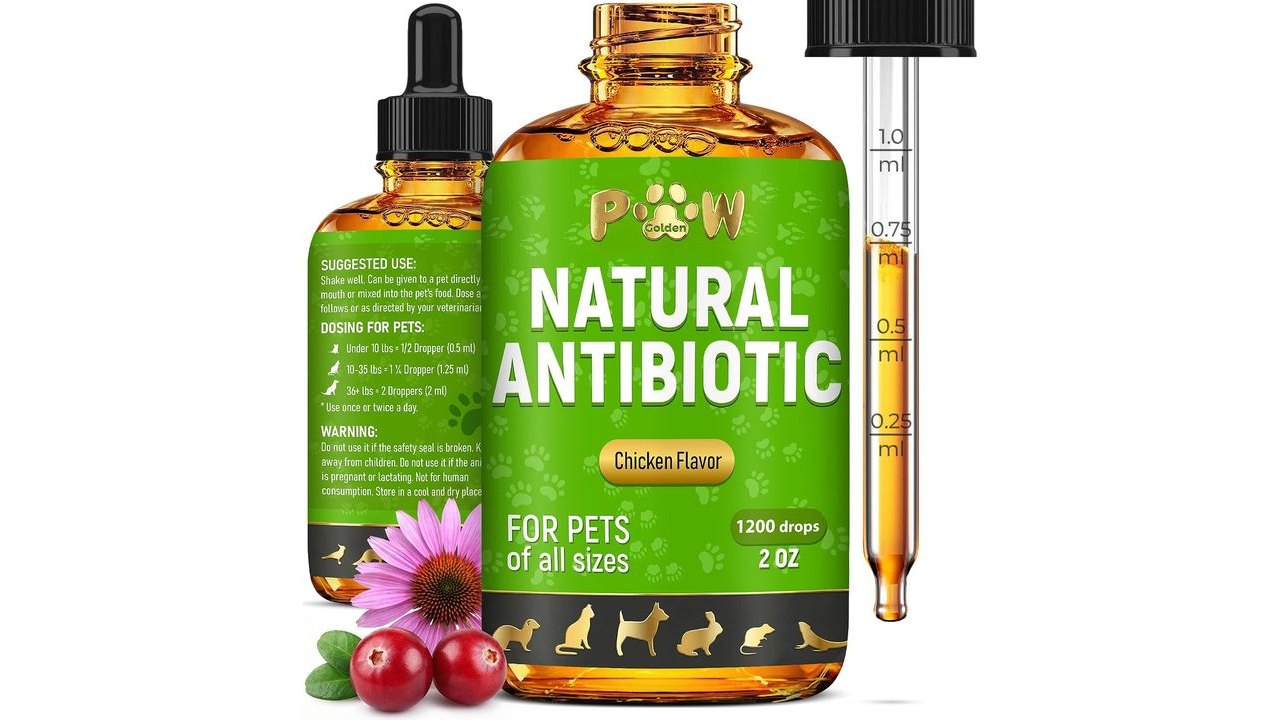
The label’s own weight tiers don’t add up, and it’s worth knowing before you buy. As written: pets under 10 lbs get 1/2 dropper, pets 10 to 35 lbs get 1/4 dropper, and pets over 36 lbs get 2 droppers. Read that again. The middle-size animal gets less than the smallest one. That’s a clear labeling error, and it undermines confidence in the guidance.
On top of that, the chart is built around body weight in pounds, which is close to meaningless for a fish or a small turtle. There’s no species-specific dosing for aquatic animals, reptiles, or poultry. If you go this route, treat the chart as a rough starting point for mammals and lean conservative, especially with tiny animals. When in doubt, a quick call to an exotic vet about safe dosing is the smart move.
Get it now
Herbal Pet Antibiotics for Rabbits, Reptiles, Turtles, Guinea Pigs, Fish – Chicken Antibiotics in Liquid for All Birds (Duck, Turkey, Goose) – For UTIs, Allergies, Runny Nose & Digestion – 2-oz Bottle
Get the best price on Amazon →This post contains affiliate links. I may earn a commission at no extra cost to you.
Worth Knowing Before You Buy
A few practical considerations round out the picture. A 2-oz bottle dosed twice a day across several animals will empty fast, and there’s no published per-dose volume from the dropper to estimate how long it lasts. Palatability is another variable: some pets simply refuse this kind of supplement in food, and the chicken flavor is unlikely to win over fish, reptiles or turtles.
There’s also thin verified data behind it. No country of manufacture, GMP certification, or third-party testing documentation turns up in available search results, and while the Amazon rating sits at 4.4, review volume and authenticity weren’t independently verifiable. In a crowded, low-differentiation supplement category, that’s a reason to keep expectations grounded rather than a dealbreaker on its own.
Who This Is Genuinely a Good Fit For
Picture the backyard-flock keeper with a couple of rabbits, a small pond of fish, and a bearded dragon. When a chicken starts a mild sneeze or a rabbit’s stool looks off, the instinct is to do something supportive right away rather than wait days for an appointment. That owner is the target buyer here. The single-bottle, multi-species approach and the drip-into-food dosing fit that reality well.
It’s a poor fit for anyone dealing with a diagnosed infection, gaping and gasping in poultry, or any acute illness. Those need targeted care. It’s also not ideal if you want airtight sourcing transparency, since established herbal brands do that part better.
How It Compares to VetRx and Amber NaturalZ
Buyers cross-shopping this usually land on a few names. Amber NaturalZ Vibactra is a longer-established herbal brand (around since 1997) with organic and wild-harvested sourcing credentials and clearer per-species dosing, offered in 1 oz and 4 oz sizes. It’s the pick if sourcing transparency and species-specific guidance matter most to you.
VetRx Poultry Aid, also a 2-oz product, is purpose-built for poultry respiratory issues and is meant to be used at the first signs of gaping, sneezing and gasping. It’s far more targeted but not cross-species. Vetericyn Plus Poultry Care Spray is topical and wound-focused, a different job entirely. And prescription veterinary antibiotics are the only option that delivers true bactericidal action, plus they can legally be called antibiotics. Herbal Pet Antibiotics competes on breadth and accessibility, not on any of those specialized strengths.
Advice for Getting the Most Out of It
If you decide it fits your setup, use it the way it’s designed: as early, mild support, not a rescue treatment. Start conservative on dose, especially for tiny animals, and don’t rely on the printed middle-tier number. For picky eaters, dripping directly into the mouth tends to work better than hiding it in food. And keep it as one tool among several rather than a replacement for professional care. If symptoms escalate or don’t ease within a day or two, that’s your cue to call a vet.
Pros
- One bottle covers a wide range of species, from rabbits and poultry to fish and reptiles
- Liquid dropper format skips the near-impossible task of pilling small and exotic animals
- Plant-based ingredient list with recognizable herbs like cranberry, echinacea and olive leaf
- Can be given by mouth or added to food, giving you flexibility with fussy pets
- Compact 2-oz size is easy to store in a pet or coop supply kit
Cons
- It’s an herbal supplement, not a true antibiotic, so it won’t treat a confirmed infection
- The weight-based dosing chart contradicts itself, with the middle tier getting less than the smallest
- No species-specific dosing for fish, reptiles or poultry
- Chicken flavor may cause fish and reptiles to refuse it
- Little verified sourcing, GMP or third-party testing documentation available
What we’d improve
Two fixes that wouldn’t be hard for a future version:
- The contradictory dosing chart, correct the middle 10 to 35 lb tier so it sits logically between the small and large amounts, and add drops-per-milliliter so buyers can estimate how long a bottle lasts.
- Missing species guidance, add basic dosing notes for fish, reptiles and poultry instead of a mammal-only weight scale that doesn’t translate to those animals.
Frequently Asked Questions
Is this actually an antibiotic or just a herbal supplement?
It’s a natural dietary supplement, not a regulated antibiotic. The FDA has not evaluated its claims, so despite the product name, it won’t work like a prescription antimicrobial on a confirmed bacterial infection. Think of it as gentle herbal support for mild, early symptoms.
Can I use one bottle for all my pets?
Yes, that’s the whole pitch. It’s marketed for rabbits, guinea pigs, reptiles, turtles, fish and poultry from a single bottle. Just know the same base herb formula appears to be repackaged across several of the brand’s listings, so you’re not getting a species-tailored blend.
Can I add it to a fish tank or water bowl?
You can add it to food or water rather than dosing by mouth, which helps with animals you can’t handle easily. For fish specifically, the label gives no tank-volume dosing, so you’d be guessing on concentration. Go very light and watch how the animals respond.
Will the chicken flavor make fish or reptiles refuse it?
Possibly. The natural chicken flavor is chosen with poultry and mammals in mind, and it’s unlikely to appeal to fish, turtles or reptiles. Some pets refuse this type of supplement in food regardless, so dosing directly may work better.
How long does a 2-oz bottle last?
Not long if you’re dosing several animals twice a day. There’s no published per-dose dropper volume, so an exact count isn’t available, but a 2-oz bottle across a multi-pet household will deplete quickly. Budget for reorders if you keep many animals.
Is it safe for pregnant or nursing animals?
The label doesn’t provide guidance for pregnant or nursing animals, and several of the herbs, like wormwood, are ones people typically use cautiously. Check with an exotic or livestock vet before giving it to an expecting or lactating animal.
Will it interact with medications my pet is already taking?
No interaction data is provided, so assume herbal supplements can interact with prescription meds. If your pet is on any medication, clear it with your vet before adding this. Combining unknowns is where trouble usually starts.
How does it compare to Amber NaturalZ or VetRx?
Amber NaturalZ is longer-established with clearer organic sourcing and per-species dosing, while VetRx Poultry Aid is purpose-built for poultry respiratory symptoms. This product’s edge is breadth and accessibility across many species from one bottle, not specialization. If you need targeted or transparent, the others edge ahead.
Should I use this instead of a vet visit for snuffles or a respiratory infection?
No, not as a replacement for real veterinary care. It may offer mild supplemental support at the first hint of a runny nose, but rabbit snuffles and poultry respiratory infections can turn serious. If symptoms persist or worsen within a day or two, see a vet.
Get it now
Herbal Pet Antibiotics
Get the best price on Amazon →This post contains affiliate links. I may earn a commission at no extra cost to you.