This post contains affiliate links. I may earn a commission at no extra cost to you.
Quick Verdict
Puffy mornings are where a stainless steel face roller earns its spot on the vanity. The cold metal moves overnight fluid and calms swelling in a few minutes, but the depuffing is cosmetic and short-lived, and this one runs heavier than a stone roller.
Buy if you:
- Wake up puffy and want something cold to glide before work or camera
- Prefer a non-porous, wipe-clean tool over a stone one
- Already use serums and want to smooth them in
- Want a passive tool with nothing to charge
Skip if you:
- Have weak wrists or hands, since metal is noticeably heavier than jade
- Expect permanent jawline sculpting or wrinkle removal
- Have active cystic acne, rosacea flares, or broken skin
The 8 A.M. Puffy Face Problem
You sleep flat for eight hours and fluid quietly pools in your face. That’s why the mirror at 7 a.m. shows softer cheeks and heavier under-eyes than you had the night before. Left alone, the puffiness fades slowly, often still visible by the time you’re on your first video call.
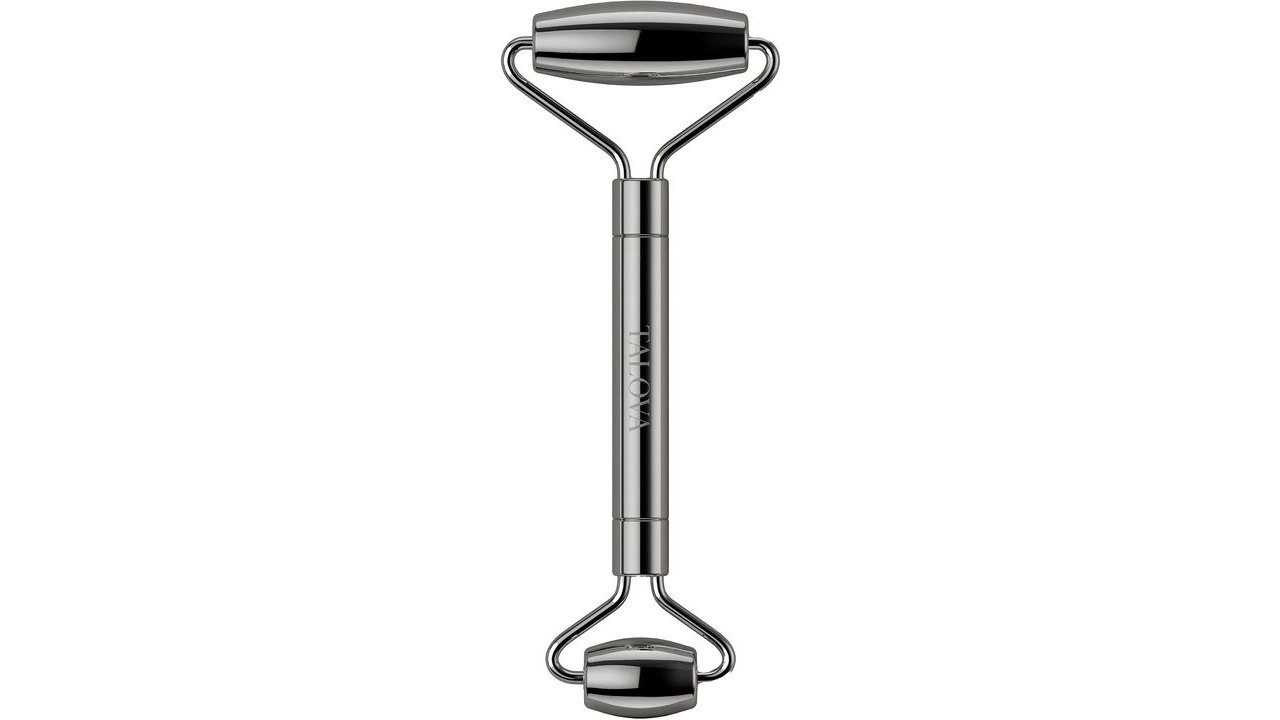
A cold roller speeds that process along. The TALOVA 304-Grade Stainless Steel Facial Roller is one of the metal options built specifically for this, using cold, non-porous steel to move stagnant fluid and calm swelling. It’s not a magic wand, and this guide walks through exactly what it does, what it doesn’t, and who should skip it.
What the Roller Actually Is
It’s a dual-ended manual roller made from 304-grade stainless steel with a smooth, non-porous finish. No batteries, no charging, no water to freeze. The large end handles cheeks, neck, and jawline; the small end is sized for the delicate under-eye zone. The metal stays cold on its own and can be chilled further if you want an extra hit of cool.
Features Translated Into What They Do For You
The 304-grade steel matters for two reasons. It’s non-porous, so it won’t trap bacteria the way stone with micro-pores can, and it stays cold longer than jade or rose quartz, which warm up fast against your skin. That cold surface is the whole point: it’s a low-effort way to get a cryotherapy-style cooling effect without keeping a tool in the freezer.
The dual-end design gives you range. Big roller for broad sweeps along the cheeks, neck, and jawline; small roller for tracing under the eyes without dragging the thin skin there. Rolling after you apply a serum or moisturizer helps smooth the product in and gives your hands something to glide against, which is more pleasant than pressing product in with fingertips.
One note on the claims. Depuffing and that temporary firmer, brighter look are real and well-loved. The bigger anti-aging, wrinkle-reduction, and lymphatic-drainage promises are common across the whole category and aren’t backed by independent clinical studies on 304-grade rollers specifically. Treat those as marketing language, not medical fact.
How It Performs on a Puffy Morning
Five to ten minutes of upward, outward strokes is the standard routine, and that’s where the cold metal does its best work. Applied on freshly cleansed skin with a thin layer of serum, moisturizer, or facial oil, the roller glides instead of dragging and helps shift the fluid that makes faces look swollen after sleep. Users reach for it most before makeup, because a depuffed, smoothed surface takes foundation more evenly.
The catch worth setting expectations on: the effect is cosmetic and temporary. You’ll look less puffy for the day, then wake up needing to do it again. There’s no evidence it permanently reshapes a jawline or erases a double chin, so the value is in the daily refresh, not a structural change.
The Weight Is the Trade-Off Nobody Warns You About
Metal is heavier than stone, and that’s the single most-cited complaint in this category. One buyer put it plainly: the stainless steel is cooling and sanitary, but it’s really heavy, and if you have weak hands or wrists, they wouldn’t recommend it. Over a five to ten minute session that heft can tire out your grip in a way a lighter jade roller wouldn’t.
The other thing to budget for is a glide product. Used dry, the roller drags across skin, which is uncomfortable and pointless. You need a serum, oil, or moisturizer underneath every time, which is an extra step and a small ongoing cost some people underestimate when they picture a “quick” routine.
Get it now
304-Grade Stainless Steel Facial Roller, Face Roller for Eyes, Double Chin, Jawline & Neck, Reduce Puffiness & Improve Wrinkles, Massage Tool for Anti-Aging, Lifting & Lymphatic Drainage
Get the best price on Amazon →This post contains affiliate links. I may earn a commission at no extra cost to you.
Who Gets the Most Out of a Steel Roller
This suits people who wake up puffy and want a cold, fast morning ritual. It fits anyone who’d rather wipe a tool clean with alcohol than worry about a porous stone harboring bacteria, and anyone who wants something always-ready with no charging. If you already spend on serums, the roller doubles as a way to smooth them in.
It’s a poor match for a few groups. Weak wrists struggle with the weight. Anyone with active cystic acne, a rosacea flare, or broken skin should avoid rolling over affected areas, which the listings rarely spell out. And anyone hoping for a permanent jawline transformation is buying the wrong tool for that goal.
Steel Roller vs. Jade, Gua Sha, and the Pricier Devices
Against a jade or rose quartz roller, steel wins on cold retention and hygiene. Stone warms quickly with body heat and loses the cooling effect faster, can chip or crack, and is famously counterfeited with dyed glass. Steel stays colder longer, tolerates alcohol sanitizing, and is more durable. The price it pays is weight.
A gua sha tool does deeper work on muscle tension and fluid movement, but it needs more technique and can leave temporary redness. A roller is gentler and friendlier for beginners and delicate areas. A water-filled ice roller delivers more intense cold but must be frozen first and is bulkier and less precise around the eyes.
Then there are microcurrent and LED devices, which have more clinical backing for collagen response but run from around one hundred to several hundred dollars, need charging, and carry cautions for pacemakers and pregnancy. A stainless roller is the passive, always-ready, low-cost end of the spectrum. A professional lymphatic facial beats all of them on technique, but at a per-session cost that dwarfs a one-time tool.
Worth Knowing Before You Buy
Keep the routine short and gentle: five to ten minutes of upward, outward strokes, always over a serum or moisturizer, never dry. Store it wherever is convenient, since it cools on its own, though a few minutes in the fridge amps up the effect on a rough morning. Wipe it down with rubbing alcohol between uses, one of the real advantages steel has over porous stone.
Set expectations around the depuffing, not the marketing. If the cooling, the serum-smoothing, and the morning refresh are what you want, it delivers those daily. If you’re chasing measurable wrinkle reduction, the evidence isn’t there, and you’d be better served putting the money toward a device with clinical backing or a professional treatment.
Pros
- Non-porous 304-grade steel stays cold longer than jade and wipes clean easily
- Dual ends cover broad areas and the delicate under-eye zone
- Passive tool with nothing to charge or freeze for basic use
- Tolerates rubbing alcohol for real sanitizing, unlike delicate stones
- Genuinely helps with temporary morning puffiness and pre-makeup prep
Cons
- Noticeably heavier than stone rollers, which can tire weak wrists
- Requires a serum or oil every time or it drags the skin
- Depuffing effect is cosmetic and returns by the next morning
- Anti-aging and lymphatic claims lack independent clinical backing
Frequently Asked Questions
Does a stainless steel face roller actually reduce puffiness, or is it placebo?
It does reduce puffiness, but the effect is temporary and cosmetic. The cold surface and rolling motion help move the fluid that pools in your face overnight, which visibly depuffs. It won’t produce lasting structural change, and the swelling can return the next morning.
How is it different from a jade or rose quartz roller?
Steel stays cold longer and is non-porous, so it won’t trap bacteria the way stone can. It also handles alcohol sanitizing and won’t chip or crack like stone. The downside is weight, since metal is heavier than jade, and stone rollers are more commonly faked with dyed glass.
Do I need to refrigerate it first?
No, it stays cool on its own thanks to the metal. Chilling it in the fridge for a few minutes gives a stronger cooling hit on a puffy morning, but it isn’t required for everyday use.
Is it safe for sensitive or acne-prone skin?
For most sensitive skin, gentle rolling is fine, and 304-grade steel is hypoallergenic. But avoid rolling over active cystic acne, rosacea flares, or broken skin, since pressure and movement can aggravate those areas. When in doubt, work around the affected zones.
When do I use the large end versus the small end?
Use the large roller for cheeks, neck, and jawline where you want broad, sweeping strokes. The small roller is sized for the under-eye area, where it can depuff and brighten without pulling the thin skin. Stick to upward and outward motions with both.
How do I clean and sanitize it?
Wipe it down after each use and sanitize with rubbing alcohol. This is one of steel’s real advantages, since alcohol can damage delicate stones but stainless steel handles it fine, leaving the tool sterile for next time.
Will it pull my skin if I don’t use a serum or oil?
Yes, used dry it drags and feels unpleasant. Apply a facial oil, serum, or moisturizer on freshly cleansed skin first so the roller glides. That extra product is a small ongoing cost to factor in.
How often should I use it and how long do results last?
Five to ten minutes of daily upward, outward strokes is the standard recommendation. Depuffing results last for the day and are strongest right after use, which is why many people roll before makeup. There’s no strong evidence for permanent jawline or wrinkle changes.
Is 304-grade stainless steel likely to cause a reaction?
304-grade stainless steel is considered hypoallergenic and is widely used against skin, so reactions are uncommon. If you have a known nickel sensitivity, patch-test on your inner arm before using it on your face.
Are the anti-aging claims backed by real evidence?
The depuffing and serum-smoothing benefits are real, but the wrinkle-reduction and lymphatic-drainage claims aren’t supported by independent clinical studies on these rollers. Those statements are vendor-sourced and not FDA-evaluated, so treat them as marketing rather than proven results.
Get it now
TALOVA Stainless Steel Facial Roller
Get the best price on Amazon →This post contains affiliate links. I may earn a commission at no extra cost to you.