This post contains affiliate links. I may earn a commission at no extra cost to you.
Quick Verdict
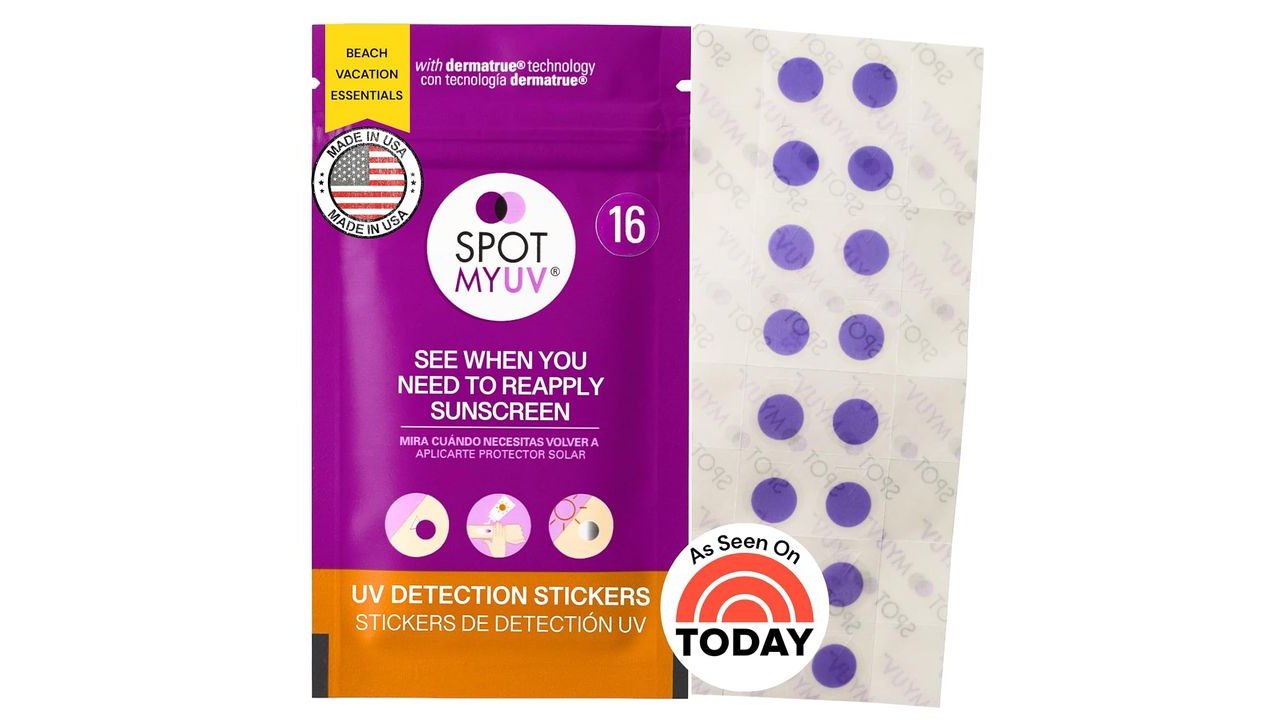
Purple means reapply, clear means you’re covered, and that’s the whole pitch. Sixteen dots per pack, up to 12 hours each, outdoor sunlight only. The value depends entirely on whether you’re the kind of person who forgets, or the kind who already reapplies on a schedule.
Buy if you:
- have fair or sun-sensitive skin and burn before you notice
- are wrangling kids at a pool or beach who won’t self-monitor
- swim or sweat, where an 80-minute timer guesses wrong
- suspect you under-apply sunscreen and want proof either way
Skip if you:
- expect an instant reading, the change can take 30+ minutes
- want indoor or through-a-window use, it won’t read accurately
- are at the beach weekly, 16 dots go fast
| Pack size | 16 stickers |
|---|---|
| Wear time | Up to 12 hours per sticker |
| Construction | DermaTrue SPF absorption layer, UV-sensing ink, adhesive |
| Adhesive | Hypoallergenic, latex-free, waterproof, medical-grade |
| Testing | Dermatologist and pediatrician tested |
| Use conditions | Outdoor sunlight only |
Sunburn Usually Happens on Hour Three
Most sunburns don’t come from skipping sunscreen. They come from applying it once at 10am and never thinking about it again. Sunscreen rubs off, sweats off, swims off, and the skin gives you no warning until the damage is already done hours later.
That’s the gap SpotMyUV Sunscreen Stickers are built for. You stick a small dot on clean, dry skin, cover it with sunscreen along with everything else, and it turns clear when protection is working. As the SPF wears down, it goes purple. No app, no alarm, no math.
A 2019 study on the product found people wearing the stickers were more likely to reapply than people who weren’t. That’s the real mechanism here. Not lab-grade measurement, but a visual nudge sitting on your forearm all day.
What the Three Layers Do for You
Each sticker stacks three things, and each one solves a specific problem. The patented DermaTrue layer mimics skin, so it absorbs sunscreen the way your arm does instead of just sitting under a film of it. That’s the part generic UV beads and wristbands don’t have. Those detect how strong the sun is. They tell you nothing about whether your SPF is still on you.
Underneath that sits the non-toxic UV-sensing ink, which is the purple-to-clear signal. And the base is a hypoallergenic, latex-free waterproof adhesive on a medical-grade transparent substrate made at a healthcare manufacturing facility in New York. That last detail matters more than it sounds, because a sticker that peels off in the first cannonball is a sticker that tells you nothing.
Translated into plain terms: it reads your actual coverage, not the clock, and it’s rated to survive the water.
The Sticker Doesn’t Turn Clear. Now What?
If it stays purple after you’ve covered it, that’s information, not a defect. Per the manufacturer, it means one of three things: the SPF is too low, the sunscreen has expired, or it was applied too thinly. Under-application is the most common of the three, and it’s the failure nobody catches on their own.
There’s a catch worth knowing. The dot reads its own coverage, not your whole body. If you slather the sticker generously and skimp on your shoulders, you’ll get a clear dot and a burned back. It’s a sampling tool, and it only samples where it sits.
Where the Stickers Fall Short
The color change is slow. One reviewer reported it took more than 30 minutes to go from purple to colorless after applying sunscreen, which is a long time to stand around wondering if it’s working. Set expectations accordingly. This is an all-afternoon signal, not a spot check.
Outdoor sunlight only. Many windows carry a UV-blocking coating, so a dot worn in the car or by a sunny window won’t read accurately. The company states this outright, but it still catches buyers out.
Reliability has been questioned too. At least one dermatologist reviewer concluded the stickers aren’t fully reliable as a sunscreen-testing instrument, and pointed out that TikTokers have pushed them well past their design intent by using them to rank SPF products against each other. Over 22 million collective views on that content has inflated what people expect. The dot was built to prompt reapplication, not to grade your sunscreen.
Then there’s the math. Sixteen stickers. Real-world reports put roughly 1.5 to 2 hours of protection before the dot goes purple, shorter if you’re swimming, so a full beach day can consume more than one. Weekly beachgoers will reorder often.
Placement is the other quiet limitation. Nearly all promotional imagery shows the dots on arms. Face use raises fair questions about visibility and whether the adhesive suits more delicate skin, and the brand doesn’t push that use case.
SpotMyUV vs. a Phone Timer vs. UV Beads
A phone timer costs nothing and is always in your pocket. Its weakness is that it’s activity-blind. An 80-minute alarm treats a swimmer and someone reading under an umbrella identically, and it’s trivially easy to swipe away.
UV beads and UV-sensing bracelets measure sun intensity. Useful, but they can’t tell you whether your protection has worn off, only that the sun is strong. That’s a different question.
UPF 50+ swimwear from brands like UV Skinz solves the problem structurally instead of monitoring it. It’s not a substitute so much as a companion, since covered skin doesn’t need monitoring and exposed skin still does.
There’s one social advantage the alternatives don’t have. If the wearer doesn’t spot the purple dot, someone standing next to them usually will. That’s a genuinely useful feature for kids who will never check a timer.
Is a 16-Count Pack Worth It?
It depends on which problem you have. If you already reapply every two hours without fail, the dots are confirming a habit you’ve got. That’s where the gimmick criticism lands fairly.
The value shifts hard for fair or sensitive skin, for parents managing kids who won’t self-monitor, and for anyone whose sunscreen routine is intention plus poor follow-through. A pack that lasts a handful of beach days against the cost of one serious burn is not a difficult trade. The technology has collected over 50 awards since the company launched in 2014 out of Mississauga, Ontario, and the Amazon listing sits at a 4.0 across 2,000+ reviews, which reads as useful rather than miraculous. That feels about right. Current pricing is on the product page.
Who Should Put These in the Beach Bag
These suit people who need feedback, not people who need a product. The sticker’s job is narrow and it does that job: it converts an invisible, gradual process into something purple you can see from across a pool deck.
What it won’t do is measure your sunscreen’s quality, work through a car window, or protect the parts of you it isn’t sitting on. Go in with that framing and the 16-count pack makes sense. Go in expecting a lab instrument and it’ll disappoint. If your summers involve kids, water, and a history of being surprised by a burn, this is an easy one to try.
Pros
- DermaTrue layer reads actual sunscreen coverage, not just UV intensity
- Rated for up to 12 hours of outdoor wear with a waterproof adhesive
- Hypoallergenic, latex-free, dermatologist and pediatrician tested
- Flags under-application and expired SPF by staying purple
- Visible to other people, which helps with kids
Cons
- Color change can take over 30 minutes to register
- Outdoor sunlight only, UV-coated windows block the reading
- Only monitors its own patch of skin, not full-body coverage
- 16 dots disappear quickly for frequent beach days
What we’d improve
Two changes that would close the gap between the promise and the reality:
- The 30-minute lag to clear, a faster-reacting ink, or a printed note on the pack setting the expectation, would stop buyers assuming a defective sticker.
- Arms-only positioning, a smaller, face-safe variant with clear guidance would answer the question the product page currently leaves open.
Frequently Asked Questions
Do the stickers work with mineral, spray and stick sunscreens?
The sticker responds to sunscreen sitting on it, so the format matters less than the coverage. Sprays and sticks are the risk, since both are easy to apply too thinly. If the dot stays purple with a spray, that’s a signal to go back over it properly.
Can you reuse one sticker across multiple sunscreen applications?
Yes, that’s the design. Each spot is rated for up to 12 hours of outdoor use and cycles between purple and clear as you reapply over it. Just make sure fresh sunscreen goes over the dot itself each time, or the reading won’t reset.
Does removing the sticker leave residue or irritate skin?
The adhesive is hypoallergenic, latex-free and medical-grade, and the product is dermatologist and pediatrician tested for all ages and skin types. That’s about as reassuring as an adhesive gets. Anyone with known adhesive sensitivities should still trial one dot before a full day out.
Should you apply the sticker before or after sunscreen?
Before, always, and onto clean dry skin. Sunscreen applied first will stop the adhesive gripping. Once the dot is down, cover it and your skin together in the same pass.
Get it now
SpotMyUV Sunscreen Stickers, UV Detection SPF Indicator Dots, 16 Count
Get the best price on Amazon →This post contains affiliate links. I may earn a commission at no extra cost to you.