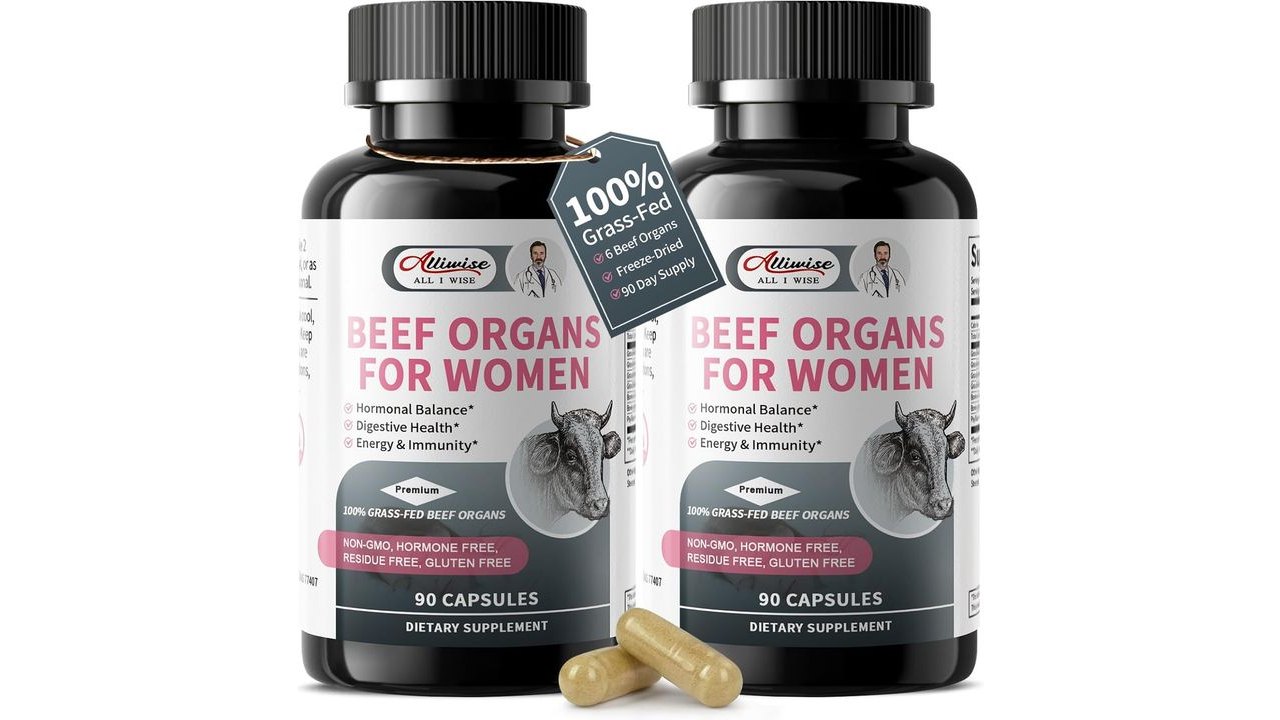
The Beef Organ Supplement for Women is worth considering if you want heme iron, B12 and zinc without eating liver, and you value a 2-capsule daily dose instead of the 6 most blends demand. It’s a reasonable buy for convenience. Skip it if third-party purity testing is non-negotiable for you.
This post contains affiliate links. I may earn a commission at no extra cost to you.
Quick Verdict
450mg of beef uterus in a 2-capsule dose is the whole pitch here, and it’s a real differentiator in a category where almost nobody includes reproductive tissue. The convenience is legitimate. The missing third-party heavy-metal certification is the thing that keeps this off a top-shelf recommendation.
Buy if you:
- Won’t eat liver but want heme iron, B12 and zinc from food-form sources
- Have abandoned other organ blends because 6 capsules a day was too many
- Specifically want beef uterus in the formula, which most brands skip
- Want a 90-day supply in one bottle rather than reordering monthly
Skip if you:
- Need NSF or USP third-party purity verification, which this listing doesn’t claim
- Have hemochromatosis, gout, high cholesterol, or are pregnant or breastfeeding
- Want high per-organ doses, since competitors deliver 3,000mg+ per serving
| Serving | 2 capsules per day |
|---|---|
| Count | 180 capsules (90-day supply) |
| Blend per serving | 450mg uterus, 300mg liver, 100mg kidney, 100mg heart, 50mg bone marrow, 50mg colostrum, 50mg psyllium husk |
| Source | 100% grass-fed, pasture-raised cattle, Argentina |
| Processing | Freeze-dried, low-temperature |
| Other | Non-GMO, gluten-free, no added hormones |
Nobody Wants to Cook Liver on a Tuesday
That’s the whole gap this category exists to fill. Heme iron, B12, zinc, CoQ10 and preformed vitamin A are concentrated in organ meats more than in any muscle cut, and women are the group most likely to be short on the first two. The problem isn’t information. It’s that liver smells like liver, kidney is worse, and almost nobody is buying beef uterus at the grocery store.
Capsules remove the taste barrier completely. The Beef Organ Supplement for Women takes that one step further by cutting the daily dose down to two capsules, where most of the category sits at six. If pill fatigue is why your last bottle of organ capsules is still three-quarters full in a cupboard, that difference is the reason to look at this one.
What the 7-in-1 Blend Means in Practice
Seven ingredients, 1,100mg of organ material total per serving. Here’s what each piece is doing and where the claim gets soft.
Beef uterus, 450mg. The largest single component and the rarest in the category. The reasoning is traditional “like supports like” organ therapy, and it should be said plainly: there are no published randomized controlled trials showing that beef uterus tissue targets human uterine health. It’s a historical practice, not a proven mechanism. If that matters to you, factor it in now rather than after you’ve bought.
Beef liver, 300mg. This is the nutritional engine. Liver carries B12, heme iron, copper and preformed vitamin A in forms the body absorbs readily. The reported effects buyers describe most often, less fatigue, steadier energy, better focus, line up with what B12 and iron repletion actually does. That’s the piece of the formula with the most support behind it.
Kidney and heart, 100mg each. Kidney contributes selenium and B vitamins; heart is where CoQ10 lives. Both are small doses at 100mg.
Bone marrow, 50mg. Marrow brings hydroxyapatite, a bioavailable calcium form, which is a sensible inclusion for a women’s formula given bone density concerns later in life. At 50mg, it’s a contribution rather than a calcium supplement.
Colostrum, 50mg. Included for immune and gut support. Same caveat applies on dose.
Psyllium husk, 50mg. This is the weakest line item in the formula. Therapeutic fiber doses run around 3,400mg. At 50mg you’re getting roughly one-sixtieth of that, so treat the “supports regular intestinal transit” claim as marketing rather than a functional fiber dose. On the upside, it’s far too small to cause the bloating psyllium is known for, or to meaningfully interfere with absorbing anything else in the capsule.
Freeze-drying is worth a word because it’s the part that’s genuinely industry-standard rather than a differentiator. Low-temperature dehydration preserves heat-sensitive compounds that high-heat processing degrades. Every serious brand in this space does it. Its absence would be a red flag; its presence is table stakes.
Is Argentina Sourcing a Problem?
Not inherently, but it’s less common than the category norm. Most premium organ supplement brands source from New Zealand and lean on that provenance heavily in their marketing. This one comes from grass-fed, pasture-raised cattle on Argentine grasslands, non-GMO, no added hormones. Argentina has enormous open grazing land and a serious cattle culture. The sourcing itself is sound.
What it costs the brand is recognition. An informed buyer who has read five reviews in this category has seen “New Zealand” five times, and a different origin reads as a question rather than a credential. That’s a perception gap more than a quality one, but it’s real and it probably shows up in the 4.1 star rating.
The Third-Party Testing Gap
This is the single biggest thing to know before buying. The listing makes no reference to NSF certification, USP verification, or independent heavy metal testing. Organ tissue filters and concentrates, which is exactly why purity verification matters more here than it does for, say, a vitamin D capsule.
Competitors have closed this gap. Codeage carries NSF certification on its grass-fed organ line at a comparable price. The best-regarded products in this category are consistently the third-party tested ones. The absence here isn’t evidence of a problem, it’s an absence of evidence, and for a daily supplement taken over 90 days that’s a reasonable thing to weigh.
The second transparency issue: iron content per serving isn’t disclosed. For a women’s formula built around liver, that’s an awkward omission, particularly for anyone already taking an iron supplement or managing a condition where iron intake matters.
Before You Buy: Dose Math and Who Should Avoid It
Run the arithmetic. Two capsules give 1,100mg of organ material. Single- and dual-organ products routinely deliver 3,000mg or more per serving. If your goal is maximum organ density, this formula isn’t it, and the convenience you’re buying is paid for in grams. If your goal is a consistent daily baseline you’ll take for three months without resenting it, that trade reads very differently.
Expect weeks, not days. Buyers who report cycle changes, shorter duration, less discomfort, generally describe them with consistent use. Energy and sleep changes follow a similar curve, which tracks with how iron and B12 stores rebuild. And a fair number of verified buyers report nothing at all. One put it flatly: no more energy, no better, just nothing. If your baseline nutrition is already solid, that’s the most likely outcome.
Talk to a doctor first, or avoid it, if you’re pregnant or breastfeeding, have hemochromatosis or another iron storage disorder, have high cholesterol or heart disease, deal with gout, or have any history of vitamin A toxicity. Liver carries preformed vitamin A, which accumulates. This isn’t a cautious disclaimer, it’s the actual risk profile of organ supplementation. The 90-day bottle is worth checking the current price on once you’ve cleared those boxes.
Pros
- Two capsules a day instead of the category-standard six, which is the difference between finishing a bottle and abandoning it
- 450mg beef uterus, a genuinely rare inclusion in mainstream organ blends
- 180 capsules works out to a full 90-day supply from one bottle
- Freeze-dried, grass-fed and pasture-raised, non-GMO, gluten-free, no added hormones
- Psyllium dose is too low to cause the bloating psyllium is usually blamed for
Cons
- No NSF, USP or independent heavy metal testing referenced anywhere in the public materials
- Iron content per serving isn’t disclosed, which matters for a liver-based women’s formula
- 1,100mg total organ content is well below the 3,000mg+ competitors deliver
- 50mg psyllium husk is roughly one-sixtieth of a functional fiber dose
- 4.1 stars sits below category leaders at around 4.7
What we’d improve
Two changes would move this from “reasonable” to “recommendable”:
- Publish a certificate of analysis, independent heavy metal and purity testing is the credential buyers in this category now expect, and competitors at the same price point already have it.
- Disclose iron and vitamin A per serving, both accumulate, both matter to the exact buyer this formula targets, and listing them would cost the brand nothing.
Frequently Asked Questions
Do the capsules smell or cause burping?
Freeze-dried organ powder in a coated capsule largely contains the odor, and this formula uses a smooth coating specifically to reduce throat residue. Any organ supplement can cause a mild aftertaste if the capsule sits in the throat, so take it with a full glass of water. Taking it with food reduces it further.
How does it compare to Ancestral Supplements or Codeage?
This one wins on dose convenience and uterus inclusion; the others win on credentials. Ancestral runs 5 organs at 6 capsules daily with a long-established following. Codeage runs 5 organs at 3 capsules and carries NSF certification. If third-party verification is your deciding factor, Codeage is the straightforward pick.
Can I take it alongside a multivitamin or iron supplement?
Check with a doctor first, because stacking is where vitamin A and iron totals get risky. Liver delivers both in preformed, accumulating versions, and the per-serving amounts aren’t listed here. Anyone already on an iron supplement should get bloodwork rather than guessing.
How should the capsules be stored?
Cool, dry, out of direct light, with the bottle sealed between uses. Freeze-dried material is moisture-sensitive, and a 90-day bottle stays open a long time. A cupboard beats a bathroom shelf or a sunny windowsill.
Get it now
Beef Organ Supplement for Women 100% Grass Fed Beef Organs 180 Count
Get the best price on Amazon →This post contains affiliate links. I may earn a commission at no extra cost to you.
If you’ve cleared the health cautions, you’re not eating organ meat, and six capsules a day is the reason your last attempt failed, this is an easy one to try at 90 days a bottle. If a certificate of analysis is what you need to see before anything goes in your body daily, a certified competitor is the better fit for now.