This post contains affiliate links. I may earn a commission at no extra cost to you.
Quick Verdict
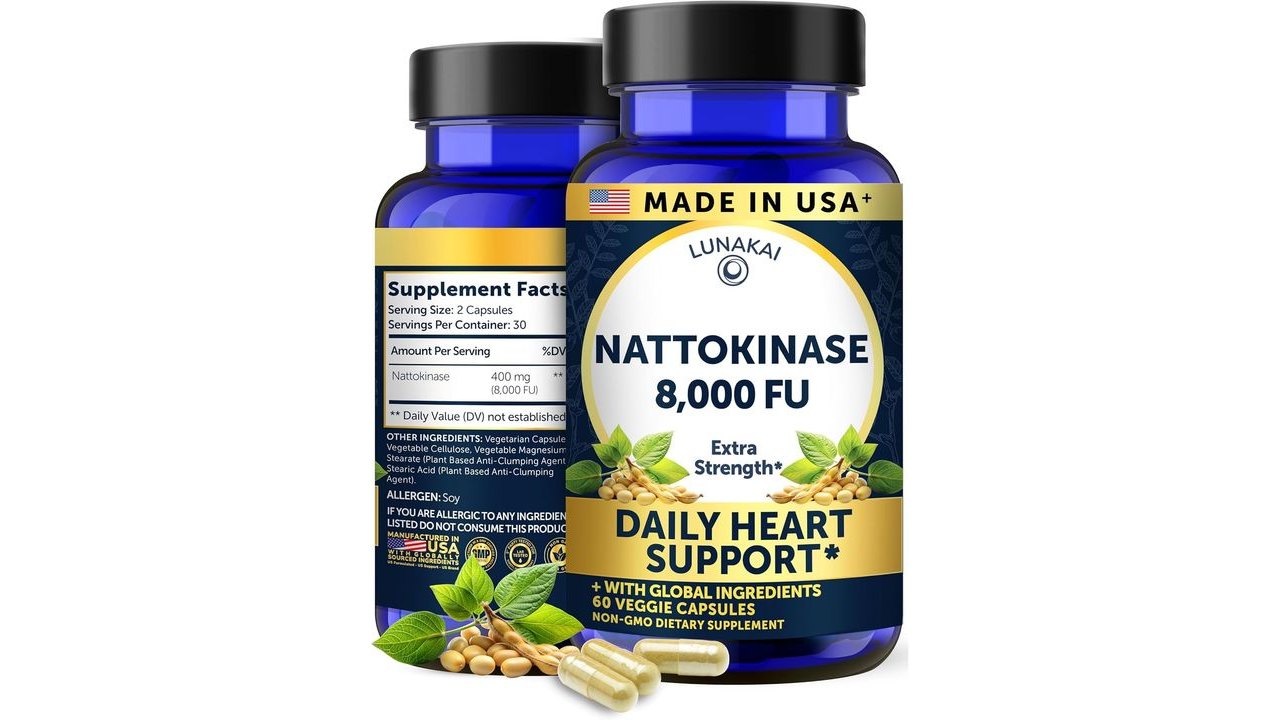
8,000 FU per serving is four times the 2,000 FU most shelf brands offer, and that single number is the whole argument for this bottle.
| Enzyme activity | 8,000 FU per 2-capsule serving |
|---|---|
| Per capsule | 200mg nattokinase, 4,000 FU |
| Count | 60 capsules (30-day supply) |
| Capsule type | 100% vegan, no gelatin |
| Manufacturing | Made in USA, global ingredients, GMP facility |
| Amazon rating | 4.5 stars |
Heavy legs and that pause before you can walk
The complaint that sends people to nattokinase is usually the same one: standing up and having to wait a beat before the body catches up. Heaviness in the legs. Fatigue after sitting too long. Buyers in this category describe it in almost identical words, and one person who came off a prescription anticoagulant noted that the standing-still pause went away early on.
The other route to the same place is natto itself. Fermented soybeans, sticky, strong smelling, expensive at the store, and known to cause digestive looseness in a way nobody plans for. Most people aren’t going to eat it daily. A capsule takes the taste problem off the table entirely, which is the practical reason the Lunakai USA Made Nattokinase Supplement exists in the first place.
What 8000 FU actually buys you
FU stands for fibrinolytic units, and it’s the only number on a nattokinase label that matters. Milligrams tell you weight. FU tells you how active the enzyme is at breaking down fibrin, the protein involved in clotting. Two products can both say 200mg and behave differently.
Here each capsule carries 200mg of nattokinase delivering 4,000 FU. Two capsules a day, so 8,000 FU per serving. For comparison, Nutricost and Doctor’s Best both sit at 2,000 FU per serving. Luma Nutrition and Horbaach land at 4,000. So this is double the stronger end of the mainstream range and quadruple the common one.
Higher isn’t automatically better, and that’s worth saying plainly. It’s better if lower doses did nothing for you. It’s not better if you’re brand new to the enzyme and would rather start conservatively, because side effect risk scales with dose too.
The vegan capsule, the clean label, and the USA caveat
No gelatin, no animal-derived ingredients, no artificial flavors or additives. That’s a real differentiator in a category where gelatin capsules are still the default, and it means the bottle works for vegan, vegetarian, and most religious dietary requirements without a workaround.
Made in the USA in a GMP facility, with global ingredients. Read that second half. GMP covers process consistency, which is meaningful. “Global ingredients” means the raw nattokinase isn’t necessarily domestic, and buyers who read “USA Made” as fully domestic sourcing are going to be disappointed by the fine print. Nothing misleading about it, just not what the headline suggests.
One thing the listing doesn’t advertise: enteric coating. Some manufacturers coat the capsule so stomach acid doesn’t degrade the enzyme before it’s absorbed. Lunakai makes no such claim, so assume there isn’t one.
Worth knowing before you buy
The drug interaction issue is the serious one. Nattokinase should be used cautiously alongside blood thinners and blood-pressure-lowering medication, and it may raise bleeding risk around trauma or surgery. If you take warfarin, Eliquis, or daily aspirin, this is a doctor conversation, not a cart-button decision. It also doesn’t replace a prescription anticoagulant, and shouldn’t be treated as a swap.
Soy is the second flag. Nattokinase is derived from fermented soybean, and many products in this category carry soy. The Lunakai listing doesn’t prominently address allergen status, which is a gap if you’re soy allergic.
Then there’s the testing gap. ConsumerLab recommends verifying enzyme activity through a reputable independent third party, and their own testing found only 5 of 8 nattokinase supplements delivered what the label promised. Lunakai isn’t among the brands they’ve publicly tested. The brand is newer, with a thinner review history than Doctor’s Best or Nutricost, and a 4.5 star average built on far fewer ratings than category leaders. Commercial traction is there. Independent verification isn’t yet.
Digestive reactions show up too. A small number of reviewers mention heartburn or indigestion. One nattokinase user in the wider category reported severe diarrhea starting around day six. Taking it with a little food at the start is the sensible hedge.
Who this dose makes sense for
It’s the high-dose pick, and that’s a narrow but real slot. If you’ve cycled through 2,000 FU bottles without noticing anything and you’re not on interacting medication, doubling the strongest common dose in a two-capsule routine is a reasonable next step. Sixty capsules is a clean 30 days, so a month tells you something without a long commitment. Anyone starting fresh, on medication, or unwilling to buy without published lab data has better-documented options at lower potency. If the high-dose case is yours, it’s an easy one to try for a month and reassess.
Pros
- 8,000 FU per serving, the highest per-serving dose in the mainstream market
- Enzyme activity listed in FU, not just milligrams, which is the number that matters
- 100% vegan capsule with no gelatin or animal-derived ingredients
- Simple two-capsule daily routine, 60 capsules for a 30-day supply
- Capsule format sidesteps the cost and taste of eating whole natto
Cons
- No publicly available independent third-party verification of enzyme activity
- No enteric coating advertised, so stomach acid degradation is a question mark
- Soy allergen status isn’t clearly addressed on the listing
- Newer brand with a thin review history next to established competitors
| Lunakai | Nutricost | Luma Nutrition | |
|---|---|---|---|
| FU per serving | 8,000 FU | 2,000 FU | 4,000 FU |
| Capsules | 60 | 120 | 60 |
| Third-party tested | Not published | Yes | Yes |
What we’d improve
Two fixes that would close the gap with the established brands:
- Publish third-party enzyme activity results. At 8,000 FU the claim is the product. An independent certificate of analysis on the listing would settle the biggest objection outright.
- State soy allergen status on the label. Nattokinase comes from fermented soybean, so allergic buyers need a clear yes or no, not silence.
Frequently Asked Questions
Should nattokinase be taken with food or on an empty stomach?
Either works, but starting with a small amount of food is the safer approach if your stomach is sensitive. Heartburn and indigestion are the most commonly reported side effects, and food buffers that. Once you know how you tolerate it, you can shift to empty stomach if you prefer.
Is nattokinase FDA-approved?
No. It’s a dietary supplement, and the FDA doesn’t approve supplements the way it approves drugs. Research suggests this fibrinolytic enzyme may be beneficial for cardiovascular health, but clinical evidence on cardiovascular risk factors is varied rather than settled.
How long before you’d notice anything?
There’s no guaranteed timeline, and results vary by person. A 60-capsule bottle gives you 30 consistent days at two capsules daily, which is a reasonable window to judge it. Consistency matters more than dose here; skipping days makes the trial useless.
Is 60 capsules reasonable value against competitors?
Per capsule, no. Nutricost gives you 120 caps and Horbaach 150, both at lower doses. Per FU delivered, Lunakai is competitive because you’re getting 8,000 FU from two capsules instead of four or more. Check the current price at the link and do that math against the dose you want.
Get it now
Lunakai USA Made Nattokinase Supplement – 400mg Natto Enzyme, 60ct
Get the best price on Amazon →This post contains affiliate links. I may earn a commission at no extra cost to you.