This post contains affiliate links. I may earn a commission at no extra cost to you.
This post contains affiliate links. I may earn a commission at no extra cost to you.
The Ridge Wallet is a premium option, and the first thing most people ask is whether that price makes any sense for something that holds your cards. I own one, I use it, and the short answer is: for the right person, it absolutely does. For someone who doesn’t mind a traditional bifold, it probably doesn’t. Here’s where I land on it, and who I think should actually buy it.
The Problem It Solves
If you’ve ever pulled a thick, overstuffed bifold out of your back pocket at the end of a long day and felt your lower back quietly protesting, you already understand what Ridge is going after. The bulk isn’t just about looks. Sitting on an uneven wallet for hours is a genuine discomfort most people just accept because they don’t think there’s a better option. The Ridge Wallet is built around the argument that there is.
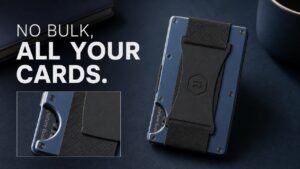
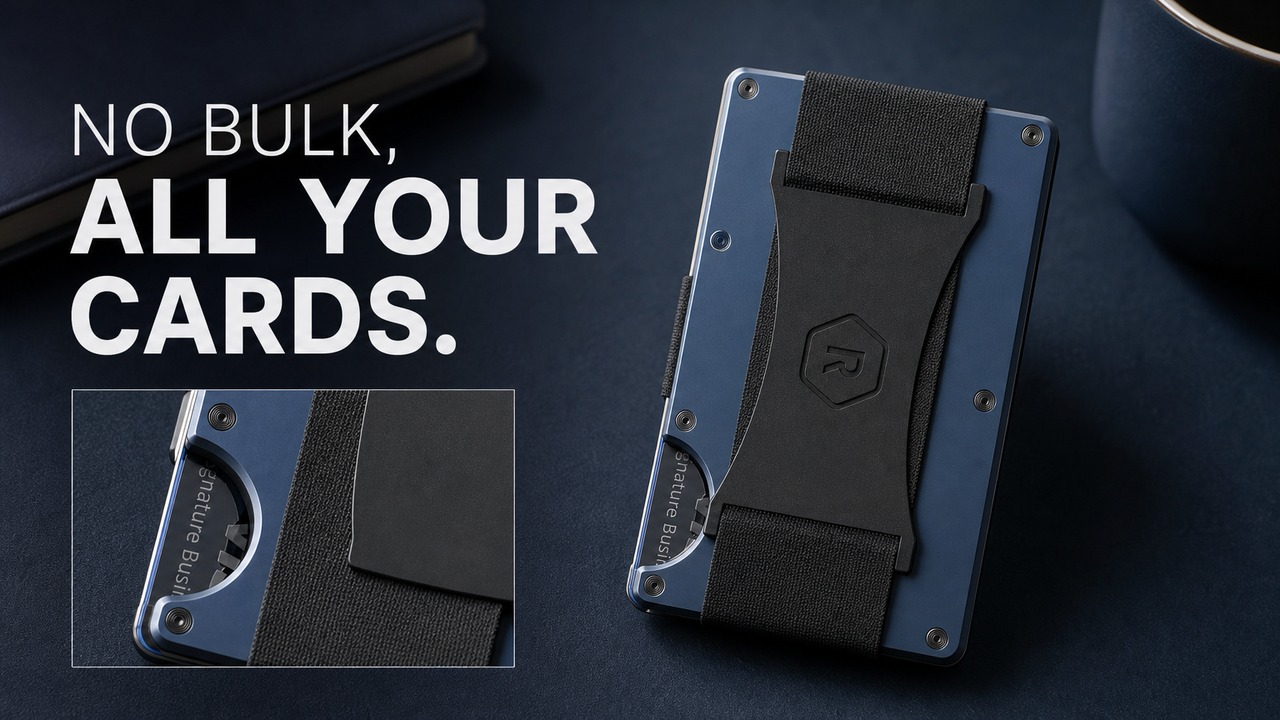
The pitch is simple: a rigid aluminum frame that holds between 1 and 12 cards, weighs almost nothing, sits in your front pocket instead of your back one, and doesn’t stretch out or wear down over time the way leather does. I keep mine in my front pocket now and I genuinely don’t notice it’s there during the day, which is the whole point.
What You’re Actually Getting
The frame is 6061-T6 aluminum with anodized plates, which is the same aluminum alloy used in aerospace and automotive applications. The Navy version has a clean anodized finish that resists scratching pretty well. The full listing title for reference is: Ridge Wallet for Men – Slim Minimalist Compact Wallet and Card Holder, RFID Protected Front Pocket Wallets for Men with Integrated Cash Strap (Navy). The frame measures 86 x 54 x 6 mm and the whole thing weighs approximately 0.1 pounds. That’s genuinely light.
The card access works through a notch on the outside edge. You press the notch with your thumb and the cards fan out slightly so you can grab the one you want. It’s a different motion than reaching into a bifold, and it takes a few days to make it feel natural. Once it does, though, it’s actually pretty efficient at a checkout counter.
The cash strap on this version wraps around the outside of the wallet and holds bills flat against the frame. There’s a metal plate on the strap for durability. It works, though I’ll be real with you: if you use a lot of cash regularly, the strap takes a small adjustment to get used to. Folding bills and sliding them under a strap is a different habit than tucking them into a pocket inside a leather wallet. It’s not a dealbreaker, just something to know going in.
RFID Blocking: Does It Matter?
The aluminum body provides RFID blocking as a structural feature, not an add-on. Because the frame is a solid metal enclosure, it surrounds your cards on all sides, which the brand says shields them from even strong RFID readers. Whether you think RFID skimming is a real risk worth paying for depends on your situation and where you travel. What I’ll say is that the protection here isn’t a marketing add-on or a special liner, it’s just a function of the material. So you’re getting it either way, which is a nice bonus even if it’s not your primary reason to buy.
The Capacity Question
The 1 to 12 card range is wide, and practically speaking, most people land somewhere in the middle. I carry fewer cards than I used to, partly because having a physical limit encouraged me to actually sort through what I was carrying. If you genuinely need 12 cards on you at all times, the wallet can do it, though at maximum capacity it’s no longer quite as slim as the marketing images suggest. The sweet spot is probably somewhere around 6 to 8 cards, where it stays thin and the notch-access system works cleanly without too much friction from the stack.
The dual-track patented design keeps cards from pinching each other or becoming difficult to separate, which is a real functional detail and not just a talking point. Cards stay organized and accessible rather than jumbled.
Build Quality and the Lifetime Warranty
This is where the price starts to make more sense. Ridge backs the wallet with what they call a Built for Life Warranty, which covers free parts and full gear replacements. The elastic, the screws, the cash strap, all of it is modular and replaceable. So when the elastic eventually wears out (and it will, over time, because elastic does that), you’re not buying a new wallet. You’re replacing a part.
That changes the value calculation significantly. A wallet you replace every few years is one thing. A wallet with a lifetime guarantee on parts is a different proposition. I find that framing genuinely compelling, especially compared to leather wallets that stretch out and wear down with no repair path.
The interchangeable screws are a small detail that matters for longevity. If you lose one or strip one, it’s not a crisis. The design is built around the assumption that you’ll use it for a long time and may need to service it.
The Ridge Wallet 2.0 Update
Ridge has released an updated version. If you’re buying new, you’re likely getting the updated version, which is worth knowing. The modularity improvements mean the cash strap and money clip are easier to swap between, so if you decide after a few months that you’d prefer the money clip version over the cash strap, you can make that change without buying a new wallet entirely.
Who This Is For
I think the Ridge Wallet is genuinely great for a specific kind of person. If you carry a small number of cards, hate back-pocket bulk, want something that will last years without degrading, or want a wallet that looks clean and professional without a lot of visual noise, this is an easy recommendation. It’s also a genuinely good gift for the person in your life who has complained about their wallet but never gotten around to fixing the problem. The Navy colorway is understated and pairs well with basically anything.
It’s less obviously right for someone who pays for almost everything with cash and needs to access bills constantly throughout the day. The cash strap works, but the experience is different from a traditional money-clip or bifold cash pocket. It’s also less right for someone who carries a lot of cards and receipts and loyalty punch cards and grocery store slips. The Ridge is not a catch-all. It’s a decision to carry less, which not everyone is ready to make.
The Price Trade-Off
This is a premium wallet, and that’s real money for something that holds your cards, and I won’t pretend otherwise. What I’d say is that the price is defensible if you stay with it long enough to appreciate the build quality and take advantage of the warranty. If you buy it, lose it in six months, and have to replace it, the value case falls apart. But if you’re the kind of person who keeps things for years and takes care of what you own, the per-year cost becomes pretty reasonable over time.
So, the practical question: is the Ridge Wallet worth the investment? For me, yes, with the context that I keep it, use it daily, and appreciate not thinking about it. For someone buying a wallet on a budget or who isn’t sure they want to change their carrying habits, maybe start with something less expensive and see if the minimalist approach suits you before committing to the price point here.
Final Take
I carry the Ridge Wallet because it’s the kind of thing that works quietly in the background without demanding attention, which is exactly what a wallet should do. The build is solid, the RFID blocking is structural rather than cosmetic, the lifetime parts warranty is a genuine differentiator, and the Navy finish looks clean after regular use. The cash strap takes adjustment if you’re coming from a traditional wallet, and the price is a real number that deserves consideration. But if you’re ready to slim down what you carry and you want something built to last, this is worth a look.
👍 Pros
- 6061-T6 aluminum frame is genuinely durable and scratch-resistant with a clean anodized finish
- Built for Life Warranty covers free parts (elastic, screws, cash strap) so you repair rather than replace
- Structural RFID blocking is a function of the aluminum body, not a separate liner add-on
- It disappears in a front pocket without the bulk of a traditional bifold
- Modular design means the cash strap and money clip are interchangeable if your preference changes
👎 Cons
- Premium pricing, and the value only compounds over time if you keep it
- The cash strap is a habit shift from traditional wallets and takes adjustment if you use a lot of cash regularly
- Maximum 12-card capacity works but reduces the slim profile, so the sweet spot is fewer cards than the upper limit
👉 The Ridge Wallet is a well-built, genuinely slim daily carry for anyone ready to pare down to the cards they actually use, backed by a lifetime parts warranty that makes the price easier to justify over time.
Frequently asked questions
How many cards can the Ridge Wallet actually hold comfortably?
The Ridge Wallet holds between 1 and 12 cards by design, but the slimmest, most practical carry is typically around 6 to 8 cards. At maximum capacity it stays functional but loses some of the slim profile that makes it appealing in the first place.
Does the Ridge Wallet really block RFID?
Yes. The RFID blocking comes from the solid 6061-T6 aluminum frame itself, which surrounds the cards on all sides. It’s a structural feature of the material rather than a special liner, so it works as long as the wallet is intact.
What does the lifetime warranty actually cover?
Ridge’s Built for Life Warranty covers parts like the elastic, screws, and cash strap at no charge, and full gear replacements at a fraction of the cost. The parts are modular and interchangeable by design, so replacing a worn elastic doesn’t mean buying a new wallet.
What’s the difference between the cash strap and money clip versions?
The cash strap wraps around the outside of the wallet and holds folded bills flat against a metal plate. The money clip is a separate listing with a different cash-carrying mechanism. Both are modular, so if you buy the cash strap version and later prefer a money clip, you can swap it without replacing the whole wallet.
Is the Ridge Wallet worth the price compared to a regular leather wallet?
The value case is strongest if you keep it long-term. A leather wallet at a lower price point degrades over time with no repair path, while the Ridge’s parts warranty means you can service it for years. If you’re ready to commit to a minimalist carry and keep your wallet for the long haul, the price-per-year math becomes reasonable.