This post contains affiliate links. I may earn a commission at no extra cost to you.
When Your Dog Starts Taking the Stairs One at a Time
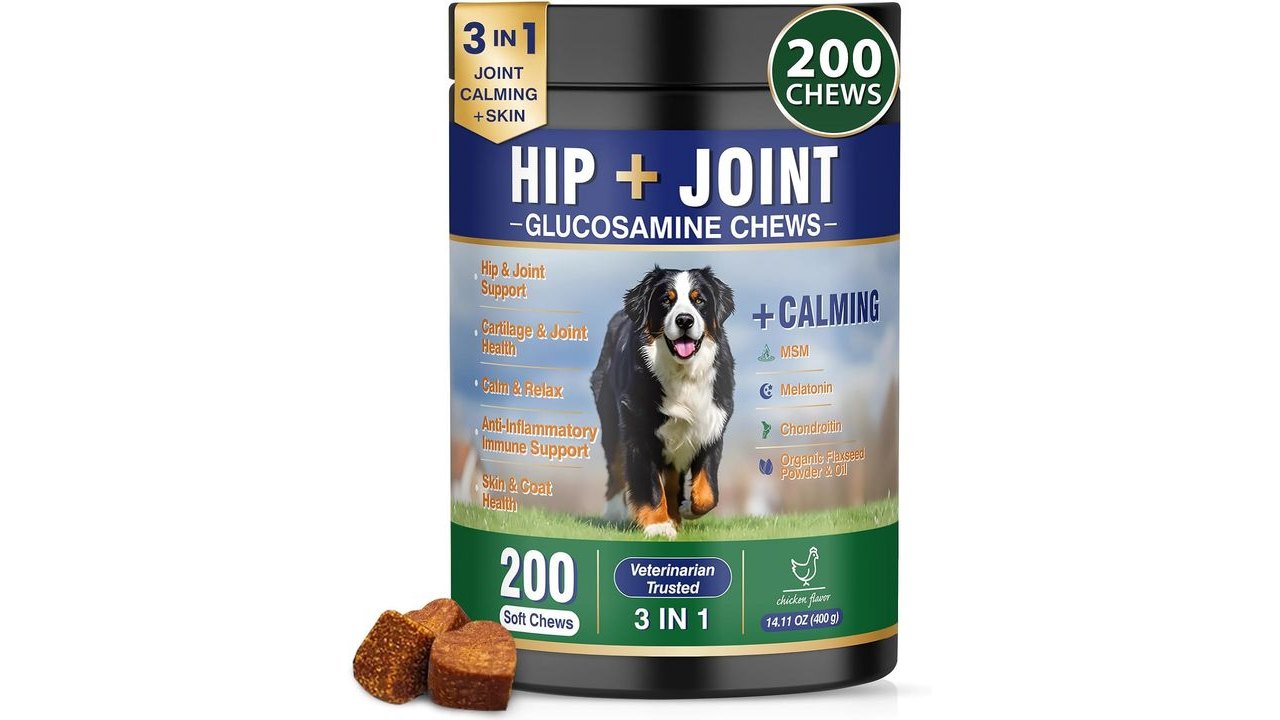
The first sign is rarely dramatic. It’s a dog who used to bolt off the couch now pausing, gathering himself, then easing down. It’s the hesitation at the bottom of the stairs, or the way an old retriever circles three times before finally settling. That slow-motion decline is what sends most owners searching for a joint supplement, and it’s exactly the problem the Hip and Joint Supplement for Dogs is built to address.
Here’s the thing about canine joints. Glucosamine is a compound a dog’s body already makes to keep cartilage flexible and joint fluid healthy. As dogs age, or if they develop osteoarthritis or hip dysplasia, they produce less of it. Cartilage wears down, stiffness sets in, and walks get shorter. This 200-count chicken-flavored chew stacks glucosamine, chondroitin, and MSM together, then adds calming and skin-support ingredients on top. Whether that combo is right for your dog depends on a few things worth walking through before you spend anything.
Quick Take
A 200-count chew that bundles the classic glucosamine-chondroitin-MSM joint stack with a calming blend and skin support, all in one chicken-flavored soft chew. The high count lowers per-chew cost, but dogs on medication or with diagnosed arthritis need a vet check first.
A good fit if you:
- Have an aging dog stiffening up on stairs or slow to rise
- Want joint, calming, and coat support in one chew instead of three bottles
- Have a dog who refuses pills but happily eats soft treats
- Want a high-count supply to cut reorder hassle
Think twice if you:
- Have a dog already on NSAIDs or blood thinners without vet clearance, since MSM has an aspirin-like effect
- Need documented therapeutic dosing, since a full supplement-facts panel isn’t published in the listing
- Have a dog with diagnosed moderate-to-severe arthritis that needs prescription care
| Spec | Detail |
|---|---|
| Count | 200 soft chews |
| Core joint stack | Glucosamine, chondroitin, MSM |
| Calming blend | Chamomile, valerian, melatonin |
| Skin & coat | Organic flaxseed oil, omega-3 fatty acids |
| Flavor | Savory chicken |
| Manufacturing | GMP certified |
| Suitable for | All breeds and life stages |
| Amazon rating | 4.6 stars |
What’s Actually in the Chew
The formula runs on three ingredient families. The joint stack is glucosamine, chondroitin, and MSM, the trio you’ll see on nearly every serious hip and joint supplement for dogs. Glucosamine is one of the most commonly used joint supplements in veterinary medicine, according to the American Veterinary Medical Association. Chondroitin works by slowing the enzymes that break cartilage down. MSM provides sulfur for connective tissue and helps reduce swelling.
The second family is the calming blend. Chamomile, valerian, and melatonin are meant to ease stress and support better rest. That’s an unusual addition for a joint chew, and it’s the product’s clearest differentiator. None of the top-selling joint chews on Amazon bundle all three calming ingredients into the same treat.
The third family covers skin and coat: organic flaxseed oil and omega-3 fatty acids, aimed at coat health and general immune support. The full listing title, for the record, is the “Hip and Joint Supplement for Dogs 200ct, Calming & Skin Support All dogs.” One catch worth flagging up front: the marketing copy doesn’t publish a complete supplement-facts panel, so verifying the exact milligram dose of each ingredient against your dog’s weight isn’t possible from the listing alone.
Translating the Features Into What They Mean for Your Dog
A soft chicken chew solves the compliance problem. Plenty of owners give up on supplements not because they don’t work but because the dog won’t eat them. Pills get spat out, powders get left in the bowl. Soft chews are the most popular format in the category precisely because they read as a treat, and a supplement your dog refuses does nothing at all.
The three-in-one design saves money and shelf space. Buying separate joint, calming, and skin bottles means paying three times and managing three routines. Bundling them into one chew cuts that down, which matters more than it sounds when you’re dosing a dog twice a day for months.
The calming layer isn’t random filler. Dogs in chronic joint pain often get more anxious, especially around movement, so pairing pain support with relaxation ingredients has a real logic to it. And the 200-count supply is above the category average, where most competitors ship 60 to 132 chews. More chews per jar means a lower per-chew cost and fewer reorders.
How Fast Results Show Up, Realistically
Joint supplements are a slow build, not a switch. In clinical research, dogs treated with glucosamine-chondroitin showed statistically significant improvements in pain scores by day 70, though the onset was slower than a prescription NSAID like carprofen. That’s the number worth internalizing. Roughly ten weeks, not ten days.
This is where a lot of owners abandon ship too early. Two weeks in with no visible change, they assume it’s a dud and stop. Cartilage support simply doesn’t work that way. The calming ingredients may show faster, since melatonin and valerian act on rest and stress rather than rebuilding tissue, but the joint benefit is a patience game. If you’re going to try it, commit to a couple of months before judging.
The Considerations Worth Knowing Before You Buy
GI upset is the most common category complaint. Most of these ingredients can cause nausea or loose stool, especially at startup. Easing in with a partial dose for the first few days is the usual workaround, and giving the chew with food helps too.
The drug-interaction point is the one to take seriously. MSM can have an aspirin-like effect, so it shouldn’t be given to a dog already on blood-thinning medication unless a vet is supervising. Same goes for dogs on NSAIDs or other prescriptions. A quick vet conversation before starting isn’t overkill here, it’s the responsible move.
Then there’s the label-transparency gap. “Vet-approved” can mean a single vet endorsed the formula, not that this exact product went through a clinical trial. “GMP certified” is a genuine quality signal about manufacturing controls, but it doesn’t guarantee the potency of each ingredient in every chew. And because the listing doesn’t publish per-ingredient milligram amounts or specify whether it uses low-molecular-weight chondroitin for better absorption, dose verification is harder than it should be. None of this makes the product bad. It just means you’re buying on a 4.6-star rating and ingredient list rather than published dosing data.
Get it now
Hip and Joint Supplement for Dogs 200ct, Calming & Skin Support All dogs
Get the best price on Amazon →This post contains affiliate links. I may earn a commission at no extra cost to you.
Who This Supplement Actually Fits
The clearest fit is the aging dog showing early mobility decline. The one who hesitates on the stairs, takes longer to rise, or seems less enthusiastic about walks. Large breeds and active pups that put heavy wear on their joints also fall squarely in the target group, since the listing markets it for senior dogs, large breeds, and active dogs alike.
It also fits the multi-symptom household. If your dog has some stiffness and gets anxious during thunderstorms and has a dull coat, the combined formula addresses all three without stacking separate products. Puppies and adult dogs can take it too, since it’s positioned for all life stages, though a younger dog with no joint issues gets less obvious value from the joint portion.
Where it’s the wrong tool: a dog with diagnosed moderate-to-severe osteoarthritis. Those cases typically need veterinary prescription treatment, not an over-the-counter chew on its own. A supplement can be part of that plan, but it isn’t a replacement for it.
How It Stacks Up Against Cosequin and Dasuquin
Nutramax’s Cosequin and Dasuquin are the benchmark, and it’s fair to name that directly. They carry the same glucosamine-chondroitin-MSM core, often add ASU and boswellia, and they’re backed by extensive third-party studies. That clinical trail is their real advantage, and it’s why vets reach for them first.
| This Supplement | Cosequin / Dasuquin | GlycoFlex 3 | |
|---|---|---|---|
| Joint stack | Gluc + Chond + MSM | Gluc + Chond + MSM ± ASU | Gluc + MSM + Perna |
| Calming blend | Yes | No | No |
| Skin / coat | Yes | Skin version only | No |
| Clinical backing | Vet-approved | Extensive studies | Strong line |
| Count | 200ct | 60, 132ct | 120ct |
Comparison drawn from category research, not a head-to-head lab test.
Where this product pulls ahead is breadth and value. No top-five competitor bundles calming ingredients into a joint chew, and the 200-count supply beats the typical 60-to-132 count on price per unit. The trade-off is trust: Cosequin has decades of vet recommendation and independent research, while this brand is Amazon-native with a thinner third-party review trail. If clinical proof is your priority, the established names win. If you want a broad all-in-one at a friendlier per-chew cost and your dog’s needs are general maintenance, this one earns its look.
Smart Ways to Start It
Talk to your vet first, especially if your dog takes any medication. That single step clears the MSM interaction concern and confirms a supplement is the right layer for your dog’s situation. Start with a reduced amount for the first few days to let the gut adjust, and give the chew with a meal to soften any startup stomach upset.
Then set a realistic clock. Mark your calendar roughly ten weeks out, because that’s when the research shows joint benefits becoming measurable. Track something concrete along the way, like how your dog handles the stairs or how quickly he rises in the morning, so you can tell whether it’s helping rather than guessing. And match the dose to your dog’s weight as best the label allows, since one chew may not be enough for a large breed.
Pros
- Full glucosamine, chondroitin, and MSM joint stack, the category standard
- Calming blend (chamomile, valerian, melatonin) that no top competitor bundles into a joint chew
- Skin and coat support from flaxseed oil and omega-3s built in
- 200-count supply lowers per-chew cost and cuts reorders
- Chicken-flavored soft chew format that most dogs eat willingly
Cons
- No full supplement-facts panel published, so per-ingredient dosing can’t be verified
- MSM’s aspirin-like effect makes it risky for dogs on blood thinners or NSAIDs without vet clearance
- “Vet-approved” is vague label language, not clinical proof of this formula
- Amazon-native brand with a thin independent review trail
- Joint results take around ten weeks, so it tests your patience
Frequently Asked Questions
Does my dog actually need a joint supplement?
If your dog is aging, stiffening up, hesitating on stairs, or slow to rise, a joint supplement has a real basis, not just marketing. Dogs make less glucosamine as they age, and glucosamine is one of the most commonly used joint supplements in veterinary medicine. A young dog with no mobility signs gets far less benefit from the joint portion.
Is it safe to give my dog melatonin and valerian every day?
Generally these calming ingredients are considered safe in dogs, but some vets hesitate about long-term daily melatonin because no confirmed optimal canine dose exists. Most dogs won’t be groggy at supplement levels, but if you notice excess drowsiness, talk to your vet about dosing or frequency.
Can I give this to a puppy?
Yes, the product is positioned for all life stages, including puppies and adult dogs. That said, a healthy young dog with no joint issues gains most from the skin and calming portions rather than the joint support. Check with your vet before starting any daily supplement on a growing dog.
Does glucosamine plus chondroitin plus MSM work better than glucosamine alone?
The combined stack is the veterinary standard because each ingredient targets a different part of joint health: glucosamine supports cartilage, chondroitin slows cartilage breakdown, and MSM reduces swelling. Clinical research on the combination showed measurable pain-score improvement by day 70. It’s the reason nearly every serious formula uses all three.
Will these upset my dog’s stomach?
GI upset like nausea or loose stool is the most common complaint in this category, usually at startup. You can reduce the odds by starting with a partial dose for a few days and giving the chew with food. If symptoms persist beyond the adjustment period, stop and check with your vet.
What if my dog is already on medication?
Check with your vet first. MSM can act somewhat like aspirin, so it shouldn’t be combined with blood-thinning medication or given alongside NSAIDs without veterinary supervision. This is the single most important safety step before starting.
How does it compare to Cosequin or Dasuquin?
Cosequin and Dasuquin carry the same core joint ingredients and have far more clinical research and vet recognition behind them, making them the go-to for diagnosed conditions. This product’s edge is the added calming and skin support plus a higher 200-count for less per chew. For general maintenance, it’s competitive; for serious joint disease, the vet-channel names have the stronger track record.
Is “GMP certified” and “vet-approved” meaningful?
GMP certified is a real signal that the facility follows standardized production controls, though it doesn’t guarantee the potency of each ingredient. “Vet-approved” is looser and can mean a single vet endorsed the formula rather than a clinical trial on this exact product. Treat GMP as a quality plus and vet-approved as marketing you shouldn’t over-weight.
How long before I see results?
Plan on roughly ten weeks for joint benefits, based on research showing significant pain-score improvement by day 70. Calming effects may appear sooner since they don’t rely on rebuilding tissue. The biggest mistake owners make is quitting after two weeks, so give it a full couple of months before deciding.
How much do I give a large-breed dog?
Dose by weight, and one chew may not be enough for a large breed. A common benchmark is around 500 mg glucosamine and 400 mg chondroitin daily for a 25-lb dog, so bigger dogs need proportionally more. Since the listing doesn’t publish per-chew milligrams, follow the label’s weight chart and confirm with your vet.
Get it now
Hip and Joint Supplement
Get the best price on Amazon →This post contains affiliate links. I may earn a commission at no extra cost to you.